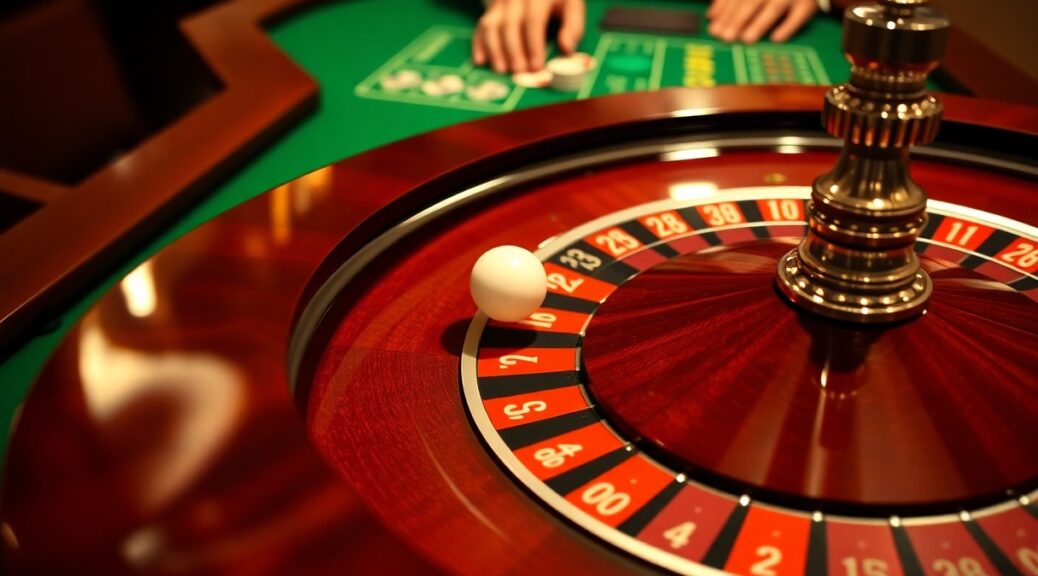
How To Choose The Best Roulette Table: Factors Every Player Should Consider
Just choosing the right roulette table demands evaluating wheel fairness, odds, and house conditions; inspect for wheel bias and understand the house edge as these pose the most danger to your bankroll, while checking table limits, payout rules, and the dealer’s reputation helps maximize positive outcomes. Also weigh game variants, minimum bets, and casino licensing to make informed, strategic selections.
Types of Roulette Tables
Tables differ by wheel layout, betting options and rules: American Roulette, European Roulette and French Roulette dominate land casinos and online lobbies. The US wheel has 38 pockets (0 and 00) producing about a 5.26% house edge; single-zero wheels cut that to ~2.70%, while French rules like la partage lower even-money losses to roughly 1.35%. Knowing how these differences change expected loss rates and variance will guide your table selection.
- American Roulette – 38 pockets, 0 and 00, ~5.26% house edge.
- European Roulette – single zero, 37 pockets, ~2.70% house edge.
- French Roulette – single zero plus la partage/en prison, ~1.35% on even-money bets.
| American Roulette | 38 pockets (0, 00); common min bets $5-$25; house edge ~5.26%. |
| European Roulette | 37 pockets (single 0); standard min bets $1-$10; house edge ~2.70%. |
| French Roulette | Single 0 with la partage/en prison; best even-money odds (~1.35%). |
| Mini Roulette | 9 pockets (0-7); novelty format with different payouts, higher variance often used in casual play. |
| Double-Ball / Multi-Ball | Two or more balls per spin; payouts and probabilities change, increasing complexity and variance. |
American Roulette
American Roulette uses 38 pockets including 0 and 00, producing a ~5.26% house edge. Casinos in the U.S. often set min bets higher-$5-$25-so bankroll impact is faster: a $10 straight-up bet has an expected loss of about $0.53 per spin. Strategy adapts to higher variance and you should favor bets with controlled stake sizes when this variant is the only option.
European Roulette
European Roulette features a single zero (37 pockets) and a ~2.70% house edge, making it the mathematically preferable standard for most players. Lower minimums ($1-$10) and reduced long-term loss rates mean a $10 even-money wager loses about $0.27 on average per spin. Expect more favorable odds for strategic bankroll play compared with American wheels.
Historically, single-zero wheels have been exploited via wheel-bias analysis-Joseph Jagger’s 1873 case and Gonzalo Garcia-Pelayo’s late-20th-century data-driven wins show that mechanical bias and dealer behavior can create short-term edges; online RNG European tables remove those physical biases, so focus on rules (e.g., presence of la partage or dealer-announced call bets) when choosing a table.
French Roulette
French Roulette keeps the single zero but adds rules such as la partage and en prison, which halve or suspend losses on even-money bets, lowering effective house edge to about 1.35% on those wagers. Casinos with French rules often attract cautious players seeking the best odds per spin.
In practice, la partage returns half the stake when zero appears on even-money bets, while en prison locks the stake for one spin and returns it if the next spin wins-both mechanics reduce variance and expected loss. High-roller French tables may still have larger minimums, so compare rule sets and bet limits to maximize the edge these rules provide.
Key Factors to Consider
When comparing tables focus on table limits, wheel quality, and payout structures, since these directly affect risk and expected returns; for example, European wheels give a house edge of 2.70% while American doubles zeros to 5.26%. Also weigh dealer consistency, layout clarity and minimums-low-min tables ($1-$10) suit tests, high-limit rooms ($100-$2,500+) change strategy. Assume that you prioritize fairness, stakes and payout rules when choosing a table.
- Table Limits – minimums and caps that shape bankroll strategy
- Wheel Quality – balance, pocket uniformity and bias risk
- Payout Structures – payouts, variants like La Partage or En Prison
- Dealer Skill – consistent spin technique and speed
Table Limits
Minimum and maximum bets dictate both risk management and which bets are viable: low-stakes tables often start at $1-$5 with maxes around $100-$500, while high-limit rooms may set minimums at $25 and caps above $2,000. Inside bets typically require larger multiples of the minimum, so check both single-number and outside bet limits before sitting; matching limits to your bankroll avoids forced, suboptimal sizing.
Wheel Quality
Wheel precision matters: look for even pocket depth, tight tolerances and smooth freespins-deflectors and rim wear can create predictable biases. A properly leveled, precision-machined wheel reduces deterministic outcomes; casinos inspect wheels routinely and serious players watch for irregular ball behavior or repeat hit zones.
More detailed inspection involves observing 500-1,000 spins to detect patterns, measuring rim and pocket dimensions for millimeter variances, and testing spin speed consistency; professional checks include laser leveling and vibration analysis. Biased wheels historically produced detectable clusters, so prefer tables with recent maintenance logs or regulatory certification.
Payout Structures
Payouts are standardized but their implementation affects expected value: straight-up bets pay 35:1, dozens and columns 2:1, and even-money bets 1:1. Variants like La Partage or En Prison on even bets reduce the house edge (e.g., European 2.70% to about 1.35%), so always confirm rule variants posted at the table.
Understanding the math: a straight-up pays 35:1 while true odds on a 37-pocket European wheel are 36:1, producing the 2.70% edge; on a 38-pocket American wheel the gap yields 5.26%. Use these figures to compare tables-same-looking layouts can differ markedly in long-term expectancy depending on zeros and rule options.
Tips for Choosing the Right Table
Narrow choices by weighing Wheel Type, House Edge, and Table Limits; American wheels carry a 5.26% house edge while European wheels sit at 2.70%. Watch minimum and maximum bets-tables with $1-$5,000 ranges suit different bankrolls-and note dealer speed and player density to manage variance. Use side-bet availability and wheel condition to gauge fairness. Knowing how House Edge and Table Limits affect variance and bankroll requirements guides the choice.
- Wheel Type (American vs European)
- House Edge (%: 5.26 vs 2.70)
- Table Limits (min/max)
- Dealer Speed and ball spin consistency
- Player Traffic (pace and available seats)
- Side Bets and special rules (e.g., La Partage)
Research Online Options
Compare live-dealer streams, RNG tables and software providers-games from reputable studios (e.g., Evolution, Playtech) usually deliver consistent physics and clear odds. Check advertised table limits, latency for live games, and bonus wagering rules that can inflate effective house edge. Analyze RTP and confirm whether the table uses European (37 pockets) or American (38 pockets) wheels before staking real money.
Visit Physical Casinos
Observe several rounds to verify wheel condition, dealer consistency and the presence of a double zero; American tables with 00 cost you more in expected loss. Note posted min bets-many local casinos run $5-$25 minimums while high-limit rooms start at $100-and check for crowded pits that slow play and increase variance per session.
Spend 15-30 minutes watching one table: count spins to spot an irregular landing pattern (possible wheel bias), time dealer spin-to-bet intervals to match your preferred pace, and ask the pit for house rules like en prison or La Partage. In Las Vegas many downtown tables are American 00, while European destinations and some resort casinos offer more 2.70% tables; adjusting location can cut long-term losses by roughly half on even-money bets.
Understand the House Edge
Quantify expected loss: European roulette has a 2.70% house edge (≈$2.70 lost per $100 wagered), American roulette shows 5.26% (~$5.26 per $100). La Partage or en prison rules halve the edge on even-money bets to about 1.35%, making those tables the mathematically best choice when available.
For a concrete calculation: a straight-up bet on a European wheel pays 35:1 but the true odds are 1/37; expected value = (35×1/37) + (−1×36/37) = −1/37 ≈ −0.02703, which is the −2.703% house edge. Applying this framework to different bet types and rule sets lets you compute practical long-term expectation and choose the table that minimizes predictable loss.
Step-by-Step Guide to Selecting a Table
| Step | Action / Why |
|---|---|
| Step 1: Determine Your Budget | Set a session bankroll, check table min/max, and size bets so you can withstand variance (e.g., $500 bankroll with $5-$25 typical bets). |
| Step 2: Identify Your Play Style | Match risk profile to bet types: outside bets for low variance, inside bets or systems like Martingale for higher variance and bigger payouts. |
| Step 3: Test Different Tables | Observe wheel condition, dealer speed, and rules (French/European vs American); prefer tables with single-zero or La Partage when possible. |
Determine Your Budget
Allocate a session bankroll and cap loss per session; many pros use a 1-5% risk-per-spin rule-on a $500 bankroll that’s $5-$25 per spin. Check the table minimum to ensure you can play at least 50-100 bets without busting, and confirm the maximum won’t force you into larger-than-intended wagers during winning streaks.
Identify Your Play Style
Decide whether you prefer steady returns or occasional big wins: outside bets (red/black, ~48.65% on European) deliver low variance, while straight-up bets pay 35:1 but hit only ~2.7% (1/37). Factor in whether you’ll use systems like flat betting or Martingale, since table limits and bankroll must support those strategies.
For example, a conservative player placing $20 even-money bets on a European wheel (18/37 win chance) keeps volatility low; an aggressive player placing $5 straight-up bets expects long losing runs but occasional 35:1 payoffs. Use concrete metrics: estimate expected loss per bet as bet × house edge (European 2.70%, American 5.26%) to compare likely outcomes across styles and wheel types.
Test Different Tables
Spend time observing each table before committing: watch dealer cadence, wheel balance, and rule tags like En Prison or La Partage. Prefer European or French tables when available-European has ~2.70% house edge vs 5.26% for American-then verify the table’s min bet aligns with your bankroll to avoid forced overexposure.
Practically, watch 50-100 spins to spot irregularities or dealer tendencies and confirm the pit enforces stated limits. Track one or two parameters-like average bet size at the table and dealer spin rate-and test playing small stakes for 30-60 minutes; if wheel wear, dealer rush, or restrictive max bets appear, move to another table that better fits your bankroll and strategy.
Pros and Cons of Different Roulette Tables
| Pros | Cons |
|---|---|
| American: widely available in US casinos and offers high volatility for bigger payouts. | American: 38 pockets produce a 5.26% house edge, higher player disadvantage. |
| European: lower house edge and cleaner odds for even-money bets. | European: fewer novelty side bets and sometimes lower variance for thrill-seekers. |
| French: often offers “en prison” / la partage rules that cut house edge on even bets. | French: less common outside premium casinos, limiting access for casual players. |
| Low-limit tables: allow longer sessions and bankroll stretching for recreational players. | Low-limit: smaller wins and limited VIP promotions compared with high-stakes areas. |
| High-limit tables: bigger payouts, private service and added table features. | High-limit: faster losses possible; requires deeper bankroll and higher risk tolerance. |
| Live dealer: authentic atmosphere, transparent spins and social interaction. | Live dealer: slower pace, possible latency, and sometimes higher minimums than RNG tables. |
| RNG/online: more betting options, promotions, and fast play for volume strategies. | RNG/online: less tactile experience; some operators vary payouts or rules by region. |
| Multi-wheel/multi-bet variants: increase action and potential returns per spin. | Variants: often carry altered payouts or rules that increase house edge subtly. |
Advantages of American Roulette
American wheels use 38 pockets (0, 00, 1-36), creating higher volatility that benefits aggressive strategies and occasional big wins; casinos often add side bets and faster spins, making it the go-to choice in many US venues. The game’s prevalence means easy table availability and frequent promotions in tourist casinos.
Disadvantages of European Roulette
European roulette has 37 pockets (single zero) and a lower house edge of 2.70%, which reduces long-term losses but also offers less volatility for players chasing large swings; additionally, some casinos restrict side bets and variant options compared with American or online offerings.
Quantitatively, the difference matters: on a $10 even-money bet the expected loss per spin is about $0.27 in European versus roughly $0.53 in American play, so over 1,000 spins that gap becomes $260 in additional expected loss – impacting bankroll planning and risk tolerance for serious players.
Recommended Resources for Further Research
Consult a mix of technical books, empirical reports and active communities to deepen table selection skills; historical cases like Joseph Jagger’s 1873 biased-wheel exploit and modern analyses show how wheel defects beat random play. Prioritize sources that publish raw spin data, sample sizes and statistical tests-claims based on thousands of spins carry more weight than anecdote. Also check casino rulebooks and published house-edge tables (European single-zero = 2.70%, American double-zero = 5.26%).
Books on Roulette Strategy
Popular, rigorous titles include Richard A. Epstein’s “The Theory of Gambling and Statistical Logic” for probability fundamentals, James Grosjean’s case-study work on advantage play, and Thomas Bass’s “The Eudaemonic Pie” for physics-based approaches. Seek editions with worked examples, chi-squared testing, and documented session logs; books that quantify variance, bankroll sizing and expected loss per 1,000 bets give actionable guidance rather than myths.
Online Forums and Communities
Active forums such as Wizard of Vegas, Reddit’s gambling subthreads and specialist bias-detection groups host spin logs, video audits and discussions of wheel wear. Favor threads where members share CSV spin datasets, run-length analyses and moderator-verified results; threads claiming big wins without data should be treated skeptically and avoided.
When vetting forum claims, require transparent methodology: ask for raw timestamps, wheel identifiers and sample sizes-ideally >5,000 spins for bias assertions-and look for authors who supply statistical tests (chi-square, runs test). Prioritize posts with reproducible spreadsheets or GitHub data, flag repeat posters with unverifiable streaks, and ignore promises of guaranteed systems.
Final Words
Presently, selecting the best roulette table requires balancing bet limits, wheel type, house edge, dealer skill, table atmosphere and payout rules; prioritize tables matching your bankroll and strategy, verify European wheels when possible for lower edge, observe dealer procedures and player behavior before sitting, and manage session length and bets to preserve capital and enjoyment. Apply these practical criteria to make informed, consistent choices at the casino floor or online.
FAQ
Q: How do I choose between European, French and American roulette wheels?
A: The wheel type determines house edge and rules that affect long-term return. European (single-zero) offers about 2.70% house edge and is the standard choice for lower casino advantage. French uses the same single-zero wheel but often includes “La Partage” or “En Prison” on even-money bets, effectively halving the house edge on those bets to about 1.35%. American (double-zero) raises the house edge to about 5.26%, making it the least favorable. Pick single-zero variants when you want better odds, and prefer French if La Partage/En Prison is available and you mainly place even-money bets. Also check for physical wheel condition (wear, ball behavior) in land-based games and RNG certification or licensing for online tables to avoid biased or unfair play.
Q: How should my bankroll and betting style influence which roulette table I play?
A: Match table limits and game pace to your bankroll and preferred volatility. Choose a table with a minimum bet that allows multiple spins per unit of bankroll (typically at least 100-200 minimum bets to reduce risk of ruin). If you use larger spreads or multiple chips per spin, ensure the maximum accommodates your strategy. Tight limits and low minimums suit conservative players and those testing systems; high-limit tables suit professional or high-variance players who accept larger bankroll swings. Consider dealer speed and number of spins per hour: faster games increase session variance and reduce thinking time. Allocate a session bankroll and set loss/profit stops so bet sizing remains proportional and prevents catastrophic losses.
Q: What table rules, side bets and operational factors should I inspect before sitting down?
A: Inspect rules and operations that affect payout and fairness. Confirm payout odds on straight-up and outside bets, and whether the house enforces en prison or la partage. Ask about special bets or call/announced bets (common in live European tables) and their minimums. For online play, verify RNG audit reports and licensing jurisdiction. Observe dealer practices: consistent croupier procedures, visibly level wheel and appropriate ball size reduce bias risk. Check table rake or commission variations (some casinos apply a commission on certain bets). Finally, evaluate seating position, dealer angle, and wheel speed patterns if using observation-based strategies; though legal and ethical considerations vary, transparent, regulated environments are always preferable.