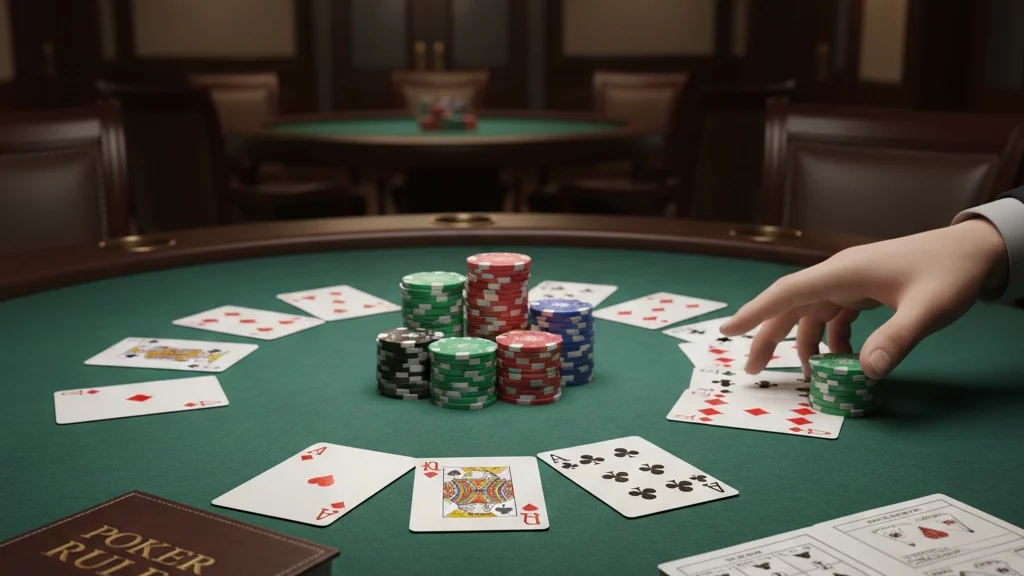
Poker hand strength explained: Ranking, ties, and poker rules

Why hand strength matters when you’re seated at the table
Knowing how poker hands are ranked is one of the simplest yet most powerful skills you can master. Whether you’re playing cash games, sit‑and‑gos, or tournament poker, hand strength determines betting decisions, bluffing frequency, and how you interpret opponents’ behavior. In practical terms, hand rankings convert the cards in your hand and on the board into a clear hierarchy: some hands will always beat others, and knowing that order lets you decide whether to call, raise, or fold.
As you learn, focus on two things: the absolute ranking of hands (which hands beat which) and the tie‑breaking rules that determine a winner when players end up with similar combinations. These rules are consistent across most standard poker variations like Texas Hold’em and Omaha, though some home games or specialty formats may add local variations.
Core hand rankings you should memorize (best to worst)
Memorizing the list below will give you instant context for any showdown. The examples assume standard high‑hand poker.
- Royal Flush — A, K, Q, J, 10 of the same suit. The strongest possible hand.
- Straight Flush — Five consecutive cards of the same suit. Higher top card wins between straight flushes.
- Four of a Kind — Four cards of the same rank plus any fifth card (the “kicker”). The rank of the four decides the winner.
- Full House — Three of a kind plus a pair. Compare the trip ranks first, then the pair if trips are equal.
- Flush — Any five cards of the same suit not in sequence. Compare highest card first, then next highest, etc.
- Straight — Five consecutive cards of mixed suits. The highest card in the straight determines the stronger hand.
- Three of a Kind — Three matching rank cards plus two unrelated side cards (kickers).
- Two Pair — Two different pairs plus a fifth card. Compare the higher pair, then the lower pair, then the kicker.
- One Pair — Two cards of the same rank plus three kickers. Pair rank wins first; kickers break ties.
- High Card — When no combination is made, the highest single card — then subsequent cards — determine the winner.
Initial tie principles: what actually breaks ties in most poker games
In most standard rules you should expect the following: suits do not rank above one another, so spades are not “higher” than hearts. Ties are broken by comparing the relevant card ranks: for pairs and sets, compare the rank of the combination, then use side cards (kickers) if necessary. When both players use the exact same five‑card combination — which can easily happen in community‑card games — the pot is split.
For example, if two players both make a straight to the Jack using the same five board cards, the pot splits because neither has a higher five‑card hand. If you both have a pair of Queens but your kicker is a King while your opponent’s kicker is a 10, your King kicker wins the hand.
Next, you’ll dive into detailed tie‑breaking examples, kicker rules in Hold’em and Omaha, and how split pots are handled at showdown.
Kicker rules and common tie scenarios in Texas Hold’em
In Hold’em, the concept of the kicker is one of the most frequent tie breakers you’ll encounter. Remember that the winning hand is the best five‑card combination you can make using any combination of your two hole cards and the five community cards. When two players make the same primary combination (pair, two pair, three of a kind, etc.), the remaining card(s) in their five‑card hand — the kicker(s) — decide the winner.
Examples make this simple. Board: A K Q 7 2. Player A: A‑9. Player B: A‑5. Both have a pair of Aces. Their best five cards are A K Q 9 7 (Player A) versus A K Q 7 5 (Player B). Player A’s 9 kicker beats Player B’s 5. If both players’ kickers are identical (for instance the board provides all the kickers), the pot is split.
Other common cases: when quads occur, the rank of the four of a kind decides first; if quads are equal (rare with community cards) the kicker resolves the outcome. For full houses compare the trips first, then the pair. For flushes compare highest card first, then next highest, and so on. Straights are compared by their highest card — A‑5 (the wheel) is the lowest straight. And crucially: suits do not break ties in standard Hold’em rules.
How ties and hand selection differ in Omaha
Omaha changes the tie logic primarily because you are dealt four hole cards and are required to use exactly two of them (plus three community cards). That requirement creates hands that would be legal in Hold’em but are illegal in Omaha — and it makes identical five‑card hands between players more common.
For example, Board: A K Q J 10. In Hold’em, someone holding K9 has a straight (10–J–Q–K–A) using one hole card; in Omaha you must use exactly two hole cards, so a player needs two cards that combine with three board cards to make the straight. That rule means you can’t “use the board” unless the best five are entirely on the board and both hole cards still follow the two‑card rule.
Because players have more hole‑card combinations, full houses, quads, and flushes can be produced by multiple players more often, increasing the frequency of split pots. When reading hands in Omaha, always confirm that each player used exactly two hole cards to form the five‑card hand before applying tie‑breaking rules (trip rank first, then pair, etc.).
How split pots and odd chips are handled at showdown
When two or more players end up with exactly the same five‑card hand, the pot is split equally between them. In community‑card games that happens frequently when the best possible hand is entirely on the board (for example, five-card straight or flush on the board). If the pot does not divide evenly, the casino’s standard practice is followed for the odd chip: it typically goes to the player seated earliest in rotation from the dealer button (clockwise).
Practical rule-of-thumb at the table: always declare your best five before the dealer asks if there’s any ambiguity, show your cards clearly when required, and be comfortable that identical hands split the pot — suits won’t save you. Understanding these small but crucial tie and split rules saves disputes and helps you make smarter action throughout the hand.
One last practical note before wrapping up: at real tables the dealer and floor staff are the final authorities on hand rulings, so if a dispute arises stay calm, state the facts (cards used, best five), and let the staff resolve it. Practicing hand reading and verbalizing which five cards you’re using will speed play and reduce disagreements.
Putting the rules into practice
Keep these simple habits as you apply the ranking and tie rules: declare your best five if asked, count kickers when pairs or trips are on the board, and always confirm that Omaha hands use exactly two hole cards. If you want a concise, official reference for common poker rules and hand rankings, check Poker rules and hand rankings.
- Show your cards clearly at showdown and state the five-card combination you’re using.
- When splitting pots, remember the odd chip typically goes to the player closest to the dealer button in clockwise order.
- Practice with sample boards to train quick kicker and full-house comparisons — speed and accuracy improve decision-making.
Frequently Asked Questions
How does the kicker decide a winner when both players have the same pair?
When two players share the same pair, compare the remaining highest cards in their five-card hands (the kickers) in descending order. The player with the higher first kicker wins; if those are equal, compare the second kicker, and so on. If all five cards are identical, the pot is split.
Can suits ever break a tie in Hold’em or Omaha?
No. In standard casino and tournament rules for Hold’em and Omaha, suits do not break ties. Identical five-card hands split the pot. Any use of suits to decide winners would be a house-specific or home-game variant and should be clarified before play.
In Omaha, can I use only one hole card or none to make my best hand?
No. Omaha requires you to use exactly two of your four hole cards and three community cards to make your five-card hand. Hands that rely on using only one hole card (or no hole cards) aren’t legal in Omaha unless the board itself provides the best five-card hand; then the board can result in a split among players.