
Poker Tournament Winners’ Secrets: Strategy Tips from Daniel Negreanu

Why studying Daniel Negreanu sharpens your tournament edge
You want practical, repeatable techniques that improve your tournament results. Daniel Negreanu is one of the most successful and vocal poker players about process and thought. Studying how he approaches opponents, hands, and table dynamics gives you tools you can apply immediately: better reads, smarter bet-sizing, and more disciplined decision-making. This section explains why his methods matter and how you can begin to adopt them at your next live or online event.
Negreanu emphasizes thinking in terms of ranges and tendencies rather than guessing single hands. That mindset shift alone will change how you interpret actions and allocate chips — you stop reacting to one action and start responding to the likely set of hands your opponent could hold. The payoff is clearer choices in marginal spots that occur constantly in tournaments.
Mastering hand reading and player profiling at the table
You can improve your win rate by becoming a better reader of opponents, and Negreanu’s approach is systematic. Start by categorizing players into broad types — tight, loose, passive, aggressive — then refine these categories with observable tendencies: how often they defend the blind, whether they continuation bet frequently, and how they respond to 3-bets. These small data points quickly build a predictive model for each player.
- Observe actions, not intentions: Record concrete actions (fold, call, raise) and frequencies rather than trying to infer motives immediately.
- Use hand ranges: When an opponent raises from early position, assign a narrow raising range; when they limp from late position, widen the range. This helps you choose correct responses.
- Adjust dynamically: Update your read after each street — a single calling line can shrink or expand an opponent’s likely holdings.
Negreanu also teaches you to combine physical and betting tells with game-theory-aware assumptions. In live games, combine timing, eye contact, and bet sizing patterns with your range analysis. Online, focus more on bet sizing, timing, and replayed hands you’ve observed. The result is a layered read that reduces variance in your decisions.
Applying position and bet-sizing principles in early tournament stages
In the early stages, you want to protect your stack while accumulating chips with low-risk edges. Negreanu advises leveraging position heavily: play more hands in late position and use small, deliberate sizing choices to extract value or push marginal opponents off equity. Your goal is to take advantage of informational and initiative advantages without committing large portions of your stack unnecessarily.
- Smaller raises from late position: Use 2–2.5x opens to build pots when you have position and fold equity.
- Continuation bets with a plan: C-bet when the board favors your perceived range, and check when it likely favors your opponent’s range.
- Protect your stack: Avoid high-variance plays before the money bubble unless you have a clear edge.
These early-stage discipline habits set the stage for deeper tournament play. Next, you’ll learn Negreanu’s specific preflop adjustments and how to translate reads into concrete betting sequences when the stakes rise.
Preflop adjustments: constructing a resilient open-raise and 3‑bet strategy
When the tournament deepens, Negreanu’s preflop adjustments are subtle but principled. He changes ranges and sizes based on stack depth, opponent type, and table dynamics rather than switching to gimmicks. Use these simple rules to mirror that approach.
- Size to communicate intent: Early stages keep opens around 2–2.5x the big blind; as antes grow and stacks tighten, increase to 2.5–3x to protect your weaker opens and make postflop decisions easier.
- Adjust ranges by stack depth: Deep stacks (>40bb): widen your opening and 3‑bet ranges to include more suited connectors and broadways; medium stacks (20–40bb): tighten speculative hands and favor high-card and suited broadway combos; short stacks (
- 3‑bet strategy by opponent profile: Versus loose openers, 3‑bet more often as a mix of value and bluffs; versus tight openers, prioritize value 3‑bets and use polarized sizing. If a player folds too much to 3‑bets, widen your bluff 3‑bet frequency; if they call and play well postflop, lean heavier on value.
- Positional leverage: Raise more liberally in late position to exploit blinds and steal pot equity. From the blinds, defend with a mix proportional to opponent size — call more against small opens, 3‑bet more against larger opens to regain initiative.
These preflop adjustments aren’t rigid charts — they’re guidelines to make your postflop life simpler and your ranges easier to interpret for yourself and harder to exploit by opponents.
Translating reads into betting sequences in middle and late stages
Negreanu’s strength is turning a read into a concrete sequence of bets that extracts value, protects equity, or folds out the right hands. The core idea: have a plan for each street before you act. Here are practical sequences to use.
- Wet board with range advantage: Lead with a standard continuation bet (40–60% pot) to deny equity and gather information. If called, size up on the turn only when your continuing range still contains many strong hands; otherwise check to control pot and re-evaluate.
- Dry board and single opponent: Use larger c‑bets (60–80% pot) to fold out marginal hands and collect thin value. Negreanu will often raise smaller c‑bets on the flop to polarize if the opponent shows weakness.
- Check-raise and float sequences: Against frequent c‑betters, incorporate well-timed floats (call flop with plan to take on turn) and check-raises when you have blockers or a strong hand. This punishes predictable opposition.
- Short-stack and shove logic: With ~10bb effective, convert medium strength hands into shoves preflop or on the flop when fold equity is significant. Use shove charts as a baseline but widen slightly if your table folds to pressure.
Always tie your sequence to the opponent’s observed tendencies: prefer thin-value bets versus calling stations, polarized lines versus sticky players, and pot-control versus aggressive opponents. Planning these sequences reduces snap mistakes and lets you extract consistent tournament equity as the blind structure accelerates.
Mental game and table selection
Beyond tactic and sizing, tournament success depends on discipline: choosing tables and opponents where your skills produce an edge, managing tilt, and staying physically and mentally sharp during long events. Make table selection a regular habit—prefer spots where you can isolate weaker players or sit in position on short stacks. Build simple routines (warm-up hands, short breaks, hydration) to keep decision quality consistent as blinds rise and fatigue sets in.
Putting Negreanu’s approach into practice
Adopt a learning-first mindset: practice one concept at a time, review hands with notes, and test adjustments in small-stakes events before applying them deep in big tournaments. Track results, iterate on what works, and remember that steady, deliberate improvement often beats sporadic brilliance. For additional insights and resources, see Daniel Negreanu’s website.
Frequently Asked Questions
How do I begin thinking in ranges instead of single hands?
Start by assigning broad categories to common preflop actions (e.g., early-position raise = strong broadways and pocket pairs; late-position limp = wide, speculative range). After each action on the flop, narrow or widen that range based on betting patterns and board texture. Practice by reviewing hand histories and writing down plausible ranges for each street.
When should I widen or tighten my 3‑bet and open-raise ranges?
Adjust based on stack depth and opponent tendencies. With deeper stacks (>40bb), widen to include more speculative hands and suited connectors. With medium stacks (20–40bb), favor high-card and suited broadways. Against loose, fold-prone openers, increase bluff 3‑bets; against tight openers, prioritize value 3‑bets and smaller frequency of bluffs.
How can I improve hand reading and betting sequences away from live play?
Use session reviews, solvers, and hand-history tools to study common sequences. Run through hypothetical scenarios: assign ranges, decide a plan for each street, then compare outcomes. For live play, supplement this with focused table observations—track actions like c-bet frequency and fold-to-3‑bet—to translate study into practical reads.
Practice drills, review routines, and metrics to track
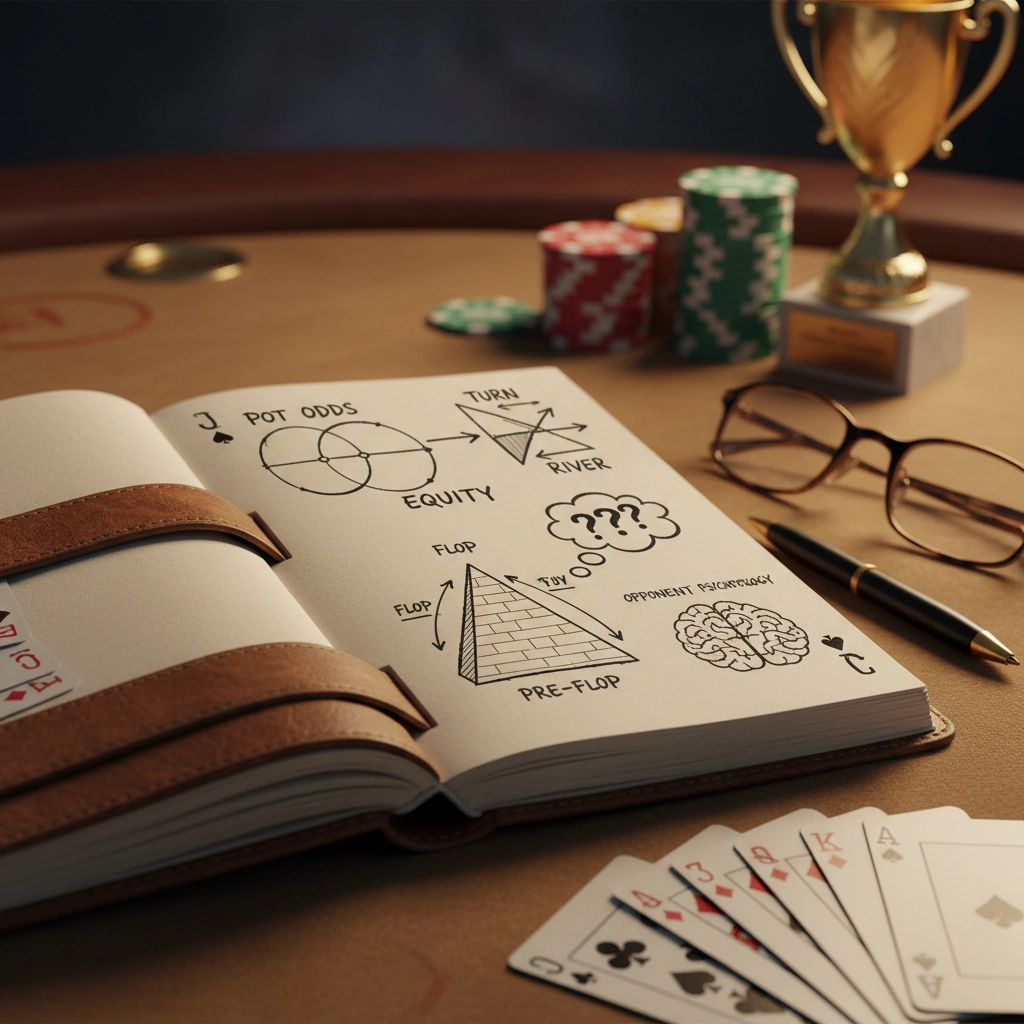
To convert ideas into consistent results, structure your practice and review like a coach would. Negreanu is methodical about practice: deliberate repetition, focused review, and measurable goals. Build a routine that balances live/online play with targeted study sessions and objective review. Below are concrete drills and a simple weekly routine you can adopt immediately to speed up learning and internalize the concepts described earlier.
Daily and weekly practice drills
- Range assignment drill (20–30 minutes): Pick 10 hands from your recent sessions. For each hand, before looking at the showdown, write the opponent’s likely range for each street and explain why you would bet, check, call, fold, or raise. Then compare to the actual line and outcome.
- Bet-sizing replay (15–20 minutes): Review 20 hands and, for each street, practice choosing three alternative bet sizes and note the expected fold equity and value you aim to achieve with each size. This strengthens purposeful sizing rather than mechanical sizing.
- Solver-informed thinking (30–60 minutes): Use a solver to study 3–4 common spots you face (e.g., 3‑bet pots in position, c-bet on dry boards). Focus on ranges and why particular lines are chosen. Don’t memorize outputs—understand principles.
- Live-tell and timing exercise (10–15 minutes): In live sessions, consciously note one physical or timing tell per opponent (e.g., hurried bets vs. deliberate counting). Keep it to a few reliable observations rather than dozens of guesses.
Weekly routine example
Structure your week with a mix of play and study. Example: three evenings of play (3–4 hours each), two short study nights (1–2 hours) focused on solver work and range drills, and one longer review session (2–3 hours) where you tag and analyze 100–200 hands. Add one recovery day without poker to manage fatigue and perspective. Consistency beats cramming—small daily improvements compound into significantly better decision-making at the tables.
Key metrics to track
Tracking objective metrics will tell you where to improve faster than intuition alone. Start a simple spreadsheet and log these numbers weekly or monthly:
- Volume: hands played, sessions, hours played.
- Basic statline: VPIP, PFR, 3‑bet%, fold-to-3‑bet%, c‑bet% (flop/turn), fold-to-c‑bet%, showdown win rate.
- Value extraction: average value bet size on showdown hands, value-to-bluff ratio in your river bets.
- Situational results: ROI by blind level (early/medium/late), ROI vs. table position, success stealing blinds from late position.
- Mental and physical: sessions lost to tilt, sessions with full attention score (self-rated 1–5).
Over time, correlate changes in these stats with the specific drills you practiced. If your fold-to-3‑bet% is dropping and your showdown win rate increases, your 3‑bet strategy practice is likely paying off. If mental metrics dip, consider shortening sessions or more frequent breaks.
How to iterate and keep progress steady
Adopt a cycle: plan, execute, review, and adjust. Start each month with a 1–2 week focus (e.g., “improve river decision-making” or “tighten late-position opening ranges”), pick matching drills, track the relevant metrics, and review at month-end. Keep notes on hands where your planned line differed from the solver or from Negreanu-style reasoning—those discrepancies are the highest-value learning moments.
- Note-taking tip: Make a short “action summary” after every significant hand: opponent type, your plan, outcome, and one improvement for next time.
- Accountability: Pair with a study partner or coach for monthly review sessions to discuss problem spots and alternative lines.
By converting Negreanu’s concepts into repeatable drills and measurable habits, you’ll turn abstract ideas about ranges, reads, and bet-sizing into tangible edges that show up in your tournament results. The final step is persistence—these routines compound, and steady application is what separates occasional brilliance from lasting success.