
Liv Bouri’s (Liv Boeree) Tournament Tactics: Poker Strategy Tips Revealed

Why Liv Boeree’s Tournament Approach Can Improve Your Results
You’ve probably heard Liv Boeree’s name in poker circles for good reason: she blends scientific thinking, disciplined risk management, and exploitative reads to consistently make deep runs. If you want to level up your tournament game, studying her approach teaches you how to think like a strategist rather than a gambler. This means focusing on long-term expected value, adapting to opponents, and using stack and ICM considerations to guide choices.
Rather than memorizing rigid rules, you’ll benefit most by adopting the principles that underpin Boeree’s play: tight-aggressive starting ranges in marginal spots, controlled aggression when you have fold equity, and a strong emphasis on position and table dynamics. Below, you’ll find practical, early-stage tactics you can apply immediately to increase survival and chip accumulation.
Early-Stage Tactics: Hand Selection, Position, and Pot Control
In the early phase of tournaments, preserving your stack while accumulating chips with clear edges is essential. You should avoid speculative heroics that risk too many blinds without sufficient fold equity or playability. Focus on these core habits:
- Prioritize position: Open with a wider range from the button and cutoff; tighten up from early positions. You gain a disproportionate advantage by acting last on later streets.
- Use pot control: When out of position with marginal hands, opt for checking or calling rather than bloating the pot. You’ll reduce variance and keep tournament life safer.
- Open-raise sizing: Keep consistent, slightly larger opens from late position (2.5–3x) to build fold equity and protect your range; smaller opens early can invite more callers and multiway pots.
- Avoid unnecessary isolation: Don’t isolate just to punish limpers unless you have both fold equity and a playable postflop hand.
- Value-selective aggression: When you have a clear range advantage, apply pressure. You should be the one making opponents uncomfortable, but choose spots where their calling range is weak.
These early-stage rules help you stay alive and set up profitable mid-game scenarios. A practical example: if you’re on the cutoff with AJo and folded to you, a standard open achieves multiple goals — you pick up blinds, maintain position, and avoid marginal flops if you face resistance from early positions.
Reading the Table: Image, Opponent Types, and ICM Thinking Early On
Even before the bubble, you should be tracking who’s folding to steals, who jams light, and who plays predictably postflop. Adjust your ranges accordingly: exploit tight players with more steals, push back on frequent stealers with stronger hands, and avoid coin-flip confrontations with deep stacks unless implied odds justify it. Early ICM is muted, but awareness of relative stack sizes and bounty structures (if applicable) should shape aggression levels.
Armed with these foundations — position-focused hand selection, controlled aggression, and conscious table-reading — you’ll create opportunities to accumulate chips without taking reckless risks. In the next section, you’ll get concrete guidance on constructing opening ranges, shove/fold thresholds, and postflop lines that mirror Liv’s tournament strategy.

Constructing Opening Ranges: Practical Templates by Seat
Liv’s approach to opening ranges is pragmatic: start with a baseline, then adjust based on opponent tendencies and stack depths. Use these templates as a starting point rather than absolute rules — they give you a clear default so you don’t guess under pressure.
- UTG (full-ring): Tight and value-heavy — roughly 10–13% of hands. Priority on broadways, strong suited Aces, and top pocket pairs. Avoid speculative offsuit hands that lose postflop playability.
- Middle Positions: Expand modestly to about 14–18%. Add suited connectors, more Axs, and medium pocket pairs (66–99) when stacks are deep enough for implied odds.
- Cutoff: Open to about 22–28%. Include a balanced mix of broadways, Axs, suited connectors, and some speculative hands you can play aggressively postflop from position.
- Button: Your widest opening spot — typically 35–45% in many live/online fields. Prioritize hands that play well suited and that can leverage position to apply pressure.
- Small Blind: Open carefully — 12–20% depending on the big blind’s tendencies and your ability to play postflop OOP. Favor hands with good equity and blocking potential.
Sizing matters with these ranges: maintain consistent open-raise sizes to build fold equity and make opponents think. In practice, slightly larger sizes from late position (2.5–3x) and smaller opens early balance aggression and invite fewer multiway pots. When opponents are calling too wide, tighten your opens and increase isolation with stronger hands.
Shove/Fold Thresholds: When to Commit or Fold
Liv treats shove/fold decisions as a combination of math and situational awareness. Use stack size in big blinds as the primary guide, then layer in ICM, opponent tendencies, and bounty incentives.
- Under 10bb: Default to a push/fold mindset. Your shove range should be wide from late position — include broadways, suited Axs, and many pocket pairs — and narrower from early positions. Versus callers who defend too light, tighten slightly.
- 10–20bb: This is the most nuanced zone. Avoid automatic shoves unless you have clear fold equity (short opponents or a tight table). With ~12–15bb, you can open-shove a decent range from the button/cutoff; with ~18–20bb prefer raising and preserving flexibility unless ICM or antes force urgency.
- 20bb+: Rarely shove pre without significant fold equity. Use raises and postflop playability — shove only as a polarized move in exploitative spots (e.g., exploit a calling-station short stack).
Always factor in ICM: nearing payout jumps, tighten your shove range even with playable hands. Conversely, in bounty events or satellite formats, widen shove ranges because the immediate reward raises EV for aggressive play. If in doubt, err on the side of preserving tournament life unless the math and position clearly favor aggression.
Postflop Line Selection: Bet Size, C-Bets, and River Decisions
Postflop is where Liv’s scientific mindset shows — decisions are chosen to maximize EV across ranges, then adjusted exploitatively. Below are practical heuristics to guide line selection.
- C-bet frequency and sizing: Versus a single caller, standard continuation bets on dry boards should be around 40–60% pot; these solicit folds and protect your range. On wet boards or multiway pots, reduce frequency and size (20–35%) and prioritize pot control unless you have a strong hand.
- Double-barrels and turn strategy: Barrel selectively. If the turn improves your perceived value range or continues to deny equity to calling ranges, apply a second barrel sized to pressure specific parts of their range. If the turn completes potential draws, check more often and use larger bet sizes when value betting.
- River choices and block bets: On the river, Liv emphasizes thin value and well-timed bluffs. Use blocker-based bets to represent strong hands when you hold cards that reduce opponents’ calling combos. When facing large river bets, evaluate whether the bettor’s line represents clean value or a polarized range; call lighter against obvious bluffs and tighten against consistent line-showing value players.
Adjust these lines based on opponent types: versus calling stations reduce bluff frequency and extract value more thinly; versus ABC players increase pressure with well-chosen bluffs. The core idea is to pick lines that protect your equity, maximize fold equity when appropriate, and avoid bloating pots with marginal hands out of position.
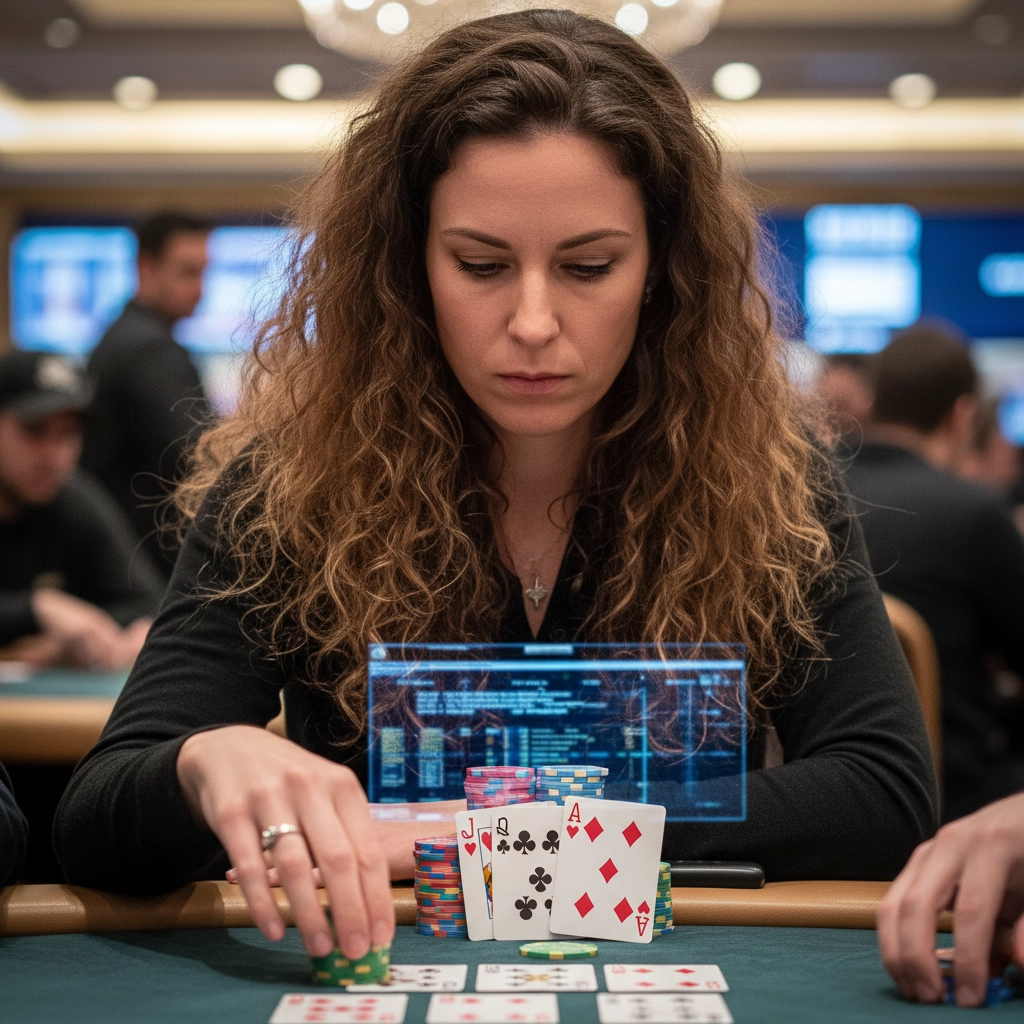
Putting Liv’s Strategy into Real-World Practice
Adopting Liv Boeree’s tournament mindset is less about copying a rigid recipe and more about developing a disciplined, evidence-driven approach to decisions at the table. Focus on measurable improvements: log hands, review critical spots, and test small, controlled adjustments in your opening ranges, shove thresholds, and postflop lines. Work on the non-technical aspects too — tilt control, bankroll management, and table selection — because those allow your strategic gains to compound. For more insights from Liv herself and resources on the intersection of poker and science, visit Liv Boeree’s website.
Frequently Asked Questions
How should I adjust Liv’s opening ranges when tournament stacks are shorter than usual?
When stacks are compressed, tighten early-position opens and widen shove/fold ranges from late position. Prioritize hands with clear shove equity or good postflop playability if you anticipate deeper play. Use the 10–20bb guidance: adopt more push-or-fold decisions under 10bb and preserve flexibility as stacks approach 20bb.
When should I prioritize ICM considerations over pure chip EV?
Prioritize ICM near bubble situations and payout jumps where laddering has outsized value. This means tightening marginal shoves and avoiding confrontations that risk your tournament life for small chip gains. Conversely, in early stages or bounty formats, chip EV can be weighed more heavily than ICM.
Are Liv’s tournament tactics applicable to cash games, and what needs to change?
Many principles transfer — position, range awareness, and exploitative adjustments — but cash games de-emphasize ICM and short-stack shove/fold logic. In cash play, focus more on deep-stack postflop strategies, exploitative vs. balancing decisions based on villain tendencies, and bankroll-sized bet sizing rather than tournament survival considerations.