
Shaun Deeb Poker Wins That Defined His Career: Key Hands Reviewed
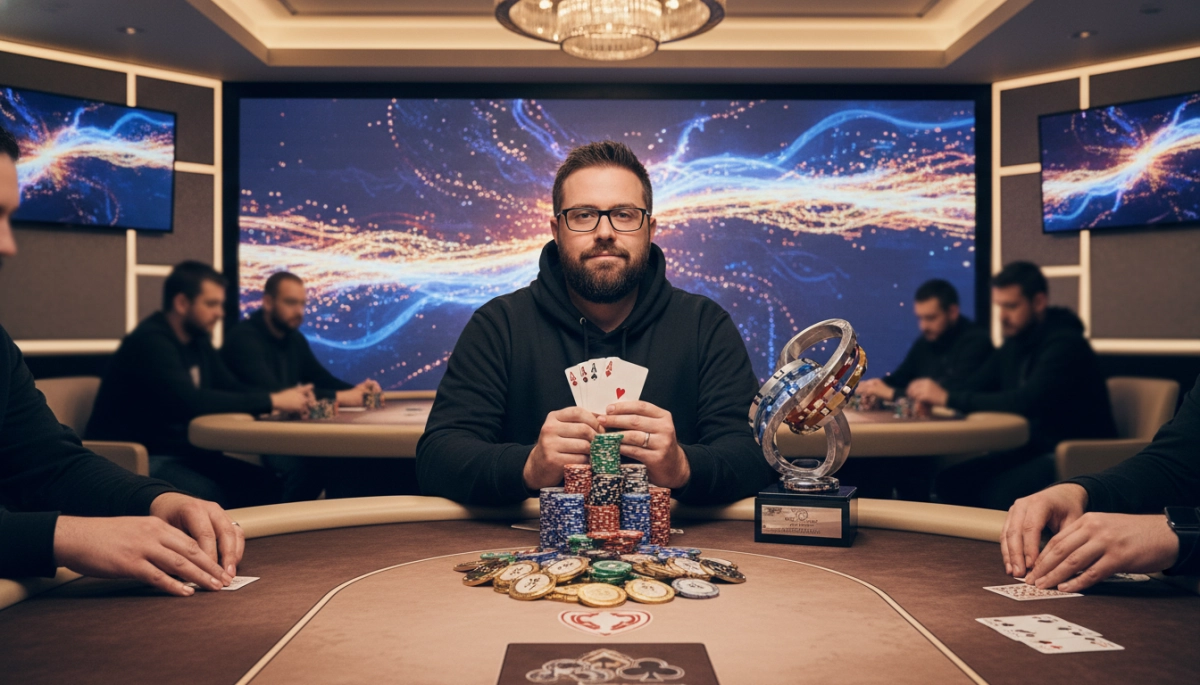
How Shaun Deeb Built a Reputation Through Consistent, Tactical Play
You probably know Shaun Deeb as one of the most adaptable tournament and cash-game players of his generation. What made him stand out early in his career wasn’t just one big score but a string of wins and influential hands that revealed a repeatable approach: exploitative aggression, advanced hand-reading, and an ability to shift gears between online and live formats. In this part, you’ll get a focused look at the formative wins and the specific lines that helped shape his style.
From Online Grind to Live Tables: The Early Breakthroughs
When you study Deeb’s early rise, notice how his online success translated to live tournaments. Online play gave him volume, exposure to diverse player types, and the mental endurance necessary for deep fields. On live stages, he applied the same principles but added attention to table dynamics and physical tells. Two recurring patterns appear in his early defining hands:
- Patience with positional advantage: Deeb often used position to apply pressure postflop, turning marginal holdings into profitable bluffing or value lines.
- Blocker-based river plays: He frequently leveraged blockers and perceived range weight to make tough river bets that folded out strong but second-best hands.
Key Early Hand Types You Should Study
Rather than a single iconic hand, Deeb’s early career is defined by clusters of hands that share structural similarities. If you want to improve, focus your review on these hand archetypes:
- Heads-up final-table pots: These hands often featured dynamic bet-sizing and frequent adaptation. You’ll see Deeb changing frequencies based on opponent tendencies rather than sticking to a fixed range.
- Multiway value extraction: In several pivotal tournaments, he navigated multiway pots by targeting the player with the most air and sizing to isolate them or thin the field.
- Turn check-raises and polarized river bets: Deeb used the check-raise on the turn to set up polarizing rivers where a committed shove or a precise fold would follow, forcing opponents into high-pressure decisions.
As you dissect these hands, pay attention to three concrete adjustments you can implement: widen your exploitative bluff range when opponents overfold, use blockers to justify larger river bluffs, and vary bet sizes to disguise the strength of your hand. These takeaways are what made early Deeb victories repeatable and teachable—skills you can practice with hand histories or solver drills.
Next, you’ll move into a closer, hand-by-hand breakdown of Deeb’s first major televised final-table victory, where a single river decision crystallized his approach and shifted how opponents viewed him at the table.
The Televised Final-Table River That Put Deeb on the Map
One hand from Deeb’s first major televised final table is often replayed for the way it encapsulated his thought process: not a lucky snap-call or an overly fancy hero-cooler, but a cold, calculated river decision built from position, blocker awareness, and opponent profiling. The line began as a standard late-stage raise-and-call sequence, but the crucial moment came on the river — a card that completed several obvious draws and made many hands look strong. Rather than defaulting to a conservative check behind, Deeb put in a sizing that represented a polarized range and forced a mistake.
What made it instructive was how each street set up that river. Preflop he used positional leverage to enter the pot with a hand that had reasonable showdown value and the potential to block large parts of his opponent’s strong river holdings. On the flop he deliberately kept the pot manageable, showing tolerance for a small turn bluff or a thin value line. The turn was where he introduced a polarizing action — a sizing that was big enough to deny equity to marginal hands but small enough to keep worse hands in. That sizing created a believable range that contained both strong made hands and air.
By the river, the board texture favored hands with two-pair or completed draws. Deeb’s river bet size was key: it was too large to be a pure blocker bet and too small to be a shove, landing exactly on a sizing that maximized fold equity against second-best holdings. He was counting blockers — cards in his hand that reduced the combinations of his opponent’s top-of-range hands — and using that to credibly represent the narrow subset of hands that beat him. The opponent folded a hand that many players would stubbornly call, and the table recognized — on the broadcast and off — that Deeb had just elevated his meta-game.
Why this hand stuck with viewers and pros alike is twofold. First, it illustrated how a player can manufacture favorable action without needing heroics: position, sizing sequencing, and blocker logic. Second, it signaled a psychological shift at the table — opponents began treating Deeb as someone who would apply sustained pressure in spots where they previously saw only passive lines. After that hand he gained more fold equity in marginal spots because opponents adjusted (often too much) to his newfound aggression.
A High-Roller Heads-Up That Showed His Adaptive Temperament
Fast-forward to a later heads-up match in a high-roller environment where one-on-one dynamics magnified every tiny adjustment. In this match, Deeb’s ability to pivot between polarized bluffs and thin-value extractions was on full display. He mixed frequencies deliberately: sometimes shoving marginal hands to exploit callers who were too sticky, and other times slowing down with big hands to induce bluffs.
Two elements defined his success in these stacks: psychological pressure and frequency manipulation. Deeb varied his shove/call thresholds based on opponent tilt and bet-sizing history, then used that information to set traps. If an opponent showed a pattern of tightening-up after losing a big pot, Deeb increased his bluff frequency to exploit overfolding. Conversely, against an opponent who loosened up, he shifted toward more value-centric sizing and fewer river bluffs.
Technically, this match is a case study in dynamic ranges. Hands that look the same in isolation — a midpair or a single-suited ace — acquired different equity and usability depending on stack depth, table image, and prior hands. Deeb’s edge was not a single genius line but a constant reinvention of ranges in response to live reads and betting history. For students of the game, the lesson is clear: mastering heads-up requires both solver-informed frequencies and the ability to bend those frequencies when real human tendencies diverge from equilibrium.
The WSOP Bracelet That Cemented His Legacy
One of the moments that firmly etched Shaun Deeb’s name into poker history came during a WSOP final table where a thin-call river decision against a seasoned opponent ended in a bracelet win. The hand wasn’t flashy — it was the product of repeated, disciplined choices across several streets. Preflop range construction, a deliberately mixed turn line, and an attentive read on timing and bet-sizing culminated in a river call that relied more on process than on instinct. For viewers and competitors, it highlighted how tournament championship moments are often won by players who make the correct small decisions with consistency rather than a single spectacular play.
Beyond the trophy, that victory amplified Deeb’s reputation for balancing solver-informed strategies with human-level adjustments. He showed that championship play is equal parts technical proficiency and the emotional control to execute those lines under pressure.
Final Notes on Emulating Deeb’s Edge
If you’re looking to incorporate elements of Shaun Deeb’s approach into your own game, focus first on process: disciplined range construction, deliberate sizing sequences, and the habit of translating observed player tendencies into concrete frequency adjustments. Pair technical study with deliberate practice — review hands with a solver, but also re-run sessions to spot psychological tendencies you can exploit.
For further reference and to track the hands and results that have shaped his career, check out Shaun Deeb on The Hendon Mob. Use that data as a scaffolding for deeper hand-study rather than an endpoint: the real growth comes from applying the same habits that carved his path — volume, reflection, and the willingness to adapt.