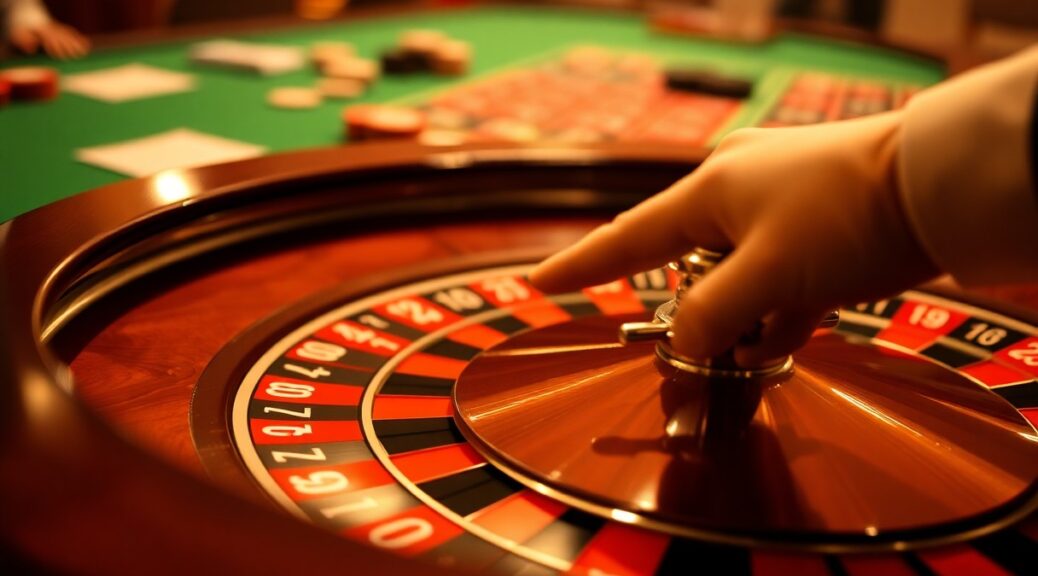
A Step-by-Step Introduction To Roulette Rules And Table Layouts
There’s no need to be overwhelmed: this step-by-step guide explains roulette rules and table layouts with educational authority, outlining the simple table layout and clear bet types, the house edge and risk of losses that make bankroll control vital, and the most common bets, payouts and how to place them so you can read a wheel and betting area confidently while appreciating both the game’s appeal and its hazards.
Types of Roulette
Variants differ by wheel pockets, table layout, and rules that affect odds; American Roulette uses a double zero, while European Roulette offers a single zero and often better odds. Wagers, payouts, and side rules like la partage or en prison change strategy and house edge. Knowing how each variant alters expected value informs betting choices.
- American Roulette
- European Roulette
- French Roulette
- Mini Roulette
- Multi-wheel Roulette
| American Roulette | 38 pockets (1-36, 0, 00); house edge ~5.26%; double zero increases expected loss. |
| European Roulette | 37 pockets (1-36, 0); house edge ~2.70%; la partage/en prison lower edge to ~1.35% on even bets. |
| French Roulette | Similar to European but with French terminology and rules on table; often lower table limits and player-friendly even-money rules. |
| Mini Roulette | Smaller wheel (typically 13 pockets); payouts differ (e.g., single-number pays 11:1) and house edge can vary widely by rule set. |
| Multi-wheel Roulette | Allows betting on several wheels at once; multiplies potential wins and variance, while house edge per wheel remains unchanged. |
American Roulette
American tables show numbers 1-36 plus 0 and 00, totaling 38 pockets; this produces a standard house edge of 5.26%. The double-zero directly increases expected loss versus single-zero games; for example, a straight-up $1 bet still pays 35:1, but the probability of winning is 1/38, raising long-term house advantage.
European Roulette
European wheels have a single 0 and 37 pockets, producing a base house edge of 2.70%. Many casinos implement la partage or en prison, which halve losses on even-money bets and reduce effective edge to about 1.35%, changing optimal betting choices and bankroll tactics.
On a European wheel the pocket sequence (clockwise) often reads 0, 32, 15, 19, 4, 21, 2, 25… which balances high/low and odd/even distribution to reduce bias; the single-zero layout places zero separately on the wheel and leftmost on the table. For strategy: a $100 even-money bet with la partage loses only $50 if 0 hits, illustrating how rule variations cut expected loss. Online live tables typically advertise these rules, so check signage to compare effective house edge before staking significant sums.
Table Layouts
Tables group the wheel’s 37 or 38 pockets into a grid of inside bets and an outer rail for outside bets. European wheels use 37 pockets (0-36), American wheels 38 pockets (0, 00-36), which raises the house edge to 5.26%. Layouts show three columns, three dozens, dedicated spots for red/black and odd/even, and clearly posted min/max limits-examples often range from $1 minimum to $5,000 maximum in casinos.
Standard Roulette Table
The typical table displays numbers in 12 rows of three with labeled columns and dozen boxes. Inside bets include straight (pays 35:1), split, street, corner and six-line; outside bets include red/black and odd/even (pay 1:1), dozens and columns (pay 2:1). Chips are placed on corresponding squares or lines, and dealers enforce posted betting limits and move the marker to indicate maximum stakes.
Special Features of the Table
Many tables include a racetrack diagram for wheel-order call bets (Neighbours, Voisins, Tiers, Orphelins) and separate boxes for 0 or 00. Some casinos implement rules like en prison or la partage, which can reduce even-money losses-la partage lowers that house edge to about 1.35%. Visible markers, a discard tray, and colored chips for different players speed play and prevent errors.
Call bets use the racetrack to map wheel adjacency: Voisins du Zéro covers 17 numbers around zero, Tiers covers 12 opposite numbers, and Orphelins covers the remaining 8. Neighbour bets place chips on a number plus its immediate wheel neighbours (e.g., “5 with 2 neighbours” covers five numbers). Casinos vary on accepting splits or straights within calls, so consult the table’s posted rules before wagering.
Step-by-Step Guide to Playing Roulette
Proceed through a clear sequence: buy chips, verify table limits (for example $5-$500), select inside or outside bets, place chips before dealer calls no more bets, watch the spin, then collect payouts or losses. Expect typical cycle times of 1-2 minutes per spin in busy casinos; plan bankroll accordingly.
| Step | Action |
|---|---|
| 1 | Purchase chips at cashier or table marker; confirm table min/max. |
| 2 | Choose inside (specific numbers) or outside (red/black, dozens) bets. |
| 3 | Place chips on numbers/lines before dealer announces no more bets. |
| 4 | Dealer spins the wheel and launches the ball; timing matters for late bets. |
| 5 | Ball lands; dealer pays winners at listed odds or collects losing chips. |
| 6 | Collect payouts (e.g., straight-up 35:1) or reshuffle for next round. |
Understanding the Betting Options
Inside bets include straight-up (pays 35:1), split (17:1), street (11:1), corner (8:1) and six-line (5:1); outside bets like red/black or odd/even pay even money, dozens and columns pay 2:1. European single-zero wheels have a 2.70% house edge, while American double-zero wheels are about 5.26%, which materially changes risk per bet.
Placing Your Bets
Place chips directly on a number for a straight-up; set a split by placing the chip on the shared line between two numbers (for example, 17/20). Dealers normally call “no more bets” roughly one second before releasing the ball; any chips placed after that are void. Always confirm table min/max-many games show limits like $1/$100.
Timing and placement vary by game: European tables allow announced or call bets for sectors (voisins, tiers), while some casinos accept only chips on layout. For bankroll control, a $200 bankroll with a $2 unit equals 1% per spin; flat betting reduces variance, whereas progression systems like martingale can exhaust funds quickly. Use sector bets to cover neighbor numbers when aiming for specific wheel sections.
Important Factors to Consider
- European Roulette
- American Roulette
- House Edge
- Payouts
- Bet Types
Table layout, wheel type and visible payout tables directly influence strategy: a single-zero wheel has 37 pockets versus 38 on a double-zero wheel, and that pocket difference shifts long-run returns. Betting limits, spread and whether the casino applies La Partage or en prison rules all affect volatility and bankroll planning. Assume that you choose tables prioritizing a single-zero layout, low minimums for session control, and explicit payout rules.
House Edge and Payouts
Straight-up bets pay 35:1 while true odds on a single-zero wheel are 37:1, producing a 2.70% house edge for European roulette. Double-zero wheels increase the edge to 5.26%, which is a significant disadvantage over many sessions. French rules like La Partage or en prison halve losses on even-money bets, reducing the effective edge to about 1.35% and improving outcomes for low-variance approaches.
Game Variation Impact
Variant choice changes both expected loss and play dynamics: American roulette adds a 00, raising house edge; mini-roulette and multi-wheel games alter payout ratios and volatility. Inside-bet payouts remain nominally the same, but probability shifts with pocket counts, so the same wager yields different expected values across variants. Live or electronic wheels can also change spin tempo and session risk.
To quantify, a $100 even-money stake yields an expected loss of about $2.70 on European wheels versus roughly $5.26 on American wheels. Multi-wheel or faster electronic variants increase spins per hour, multiplying expected losses over time even if single-spin edge is unchanged; practical table selection and session limits therefore materially affect long-term outcomes.
Tips for Winning at Roulette
Prioritize wheel selection and bet type: prefer single-zero European wheels to cut the house edge to ~2.70% instead of the American 5.26%, and favor outside bets (red/black, odd/even) with ~48.65% win probability on single-zero wheels; combine modest bet sizes with clear session limits to protect gains. Assume that prolonged losing streaks can erase profits fast without strict limits.
- Choose European wheels to lower the house edge.
- Play conservative outside bets for near-50% chances.
- Enforce stop-loss and cash-out rules to avoid chasing losses.
Strategies to Enhance Your Play
Use structured systems cautiously: Martingale recovers losses but requires exponential stake growth (six losses → 64× base bet) and risks table limits; D’Alembert and Fibonacci reduce volatility by smaller adjustments. Combine a conservative system with a fixed unit size-e.g., 1 unit = 1% of bankroll-and log results; exploiting a genuine wheel bias demands thousands of spins and precise recording before it’s profitable.
Bankroll Management Techniques
Set clear percentages: allocate a session bankroll of 2-10% of total funds and limit single bets to 0.5-2% per spin-so a $2,000 bankroll might use $200 per session and $20-$40 max bets. Enforce a session limit, stop-loss, and predefine profit targets to lock gains and prevent dangerous escalation of stakes.
Adopt unit-based staking: choose a unit = 0.5-1% of total bankroll, bet 1-3 units normally, and scale down after losses to preserve longevity; for example, with a $1,000 bankroll use $10 units and cap bets at 30 units overall. Keep a session log of spins, bet sizes, and outcomes to spot leaks or a rare biased wheel, and treat chasing losses as the primary danger to avoid.
Pros and Cons of Playing Roulette
| Pros | Cons |
|---|---|
| Easy to learn and fast to play, suitable for beginners. | House edge: European 2.70% vs American 5.26%. |
| Many spins per hour, ideal for quick sessions and excitement. | Rapid bankroll depletion possible with aggressive betting. |
| Wide bet variety with payouts up to 35:1 (straight-up). | Single-number bets carry high variance despite big payouts. |
| Low minimums at many online casinos increase accessibility. | Table limits and odds prevent indefinite progression systems. |
| Clear, transparent odds and fixed payout structure. | No consistent long-term strategy beats the house edge. |
| Works well both live and on mobile platforms. | Can encourage chasing losses and risky behavior. |
| Social atmosphere at land-based tables enhances entertainment. | Regulatory differences affect fairness and protections across venues. |
| Chance of a large one-time win appeals to many players. | Casinos retain mathematical advantage over time. |
Advantages of the Game
Many players choose roulette for its simple rules and quick resolution: a straight-up win pays 35:1 while outside bets are 1:1, and European wheels give a 2.70% house edge, making strategy choice and bet variety central to play; online games also allow micro-stakes so you can test systems or enjoy longer sessions without large bankrolls.
Disadvantages to Keep in Mind
Despite its appeal, roulette features significant variance and a built-in house edge-American double-zero games raise that to 5.26%-so expected value is negative long term and streaks of losses can quickly overwhelm casual bankrolls and betting systems.
For example, using a Martingale-style progression requires exponential capital: surviving 10 consecutive even-money losses would demand roughly 2,047× your initial stake, while the probability of 10 straight same-color outcomes on a European wheel is only about 0.08%, yet still possible and financially destructive if limits or funds are insufficient.
Conclusion
As a reminder, this step-by-step guide to roulette rules and table layouts equips players with the fundamentals of bets, wheel types, odds, and table etiquette, enabling informed decisions and responsible play. Understanding inside and outside bets, payout structures, and layout markings reduces confusion and supports strategic choices while emphasizing bankroll management and house edge awareness for safer, more confident sessions.
FAQ
Q: What is the objective of roulette and how does a typical round proceed?
A: The objective is to predict where the ball will land on the spinning wheel. A dealer (croupier) opens the betting window, players place chips on the table layout to indicate bets, the dealer closes betting and spins the wheel while releasing the ball, and when the ball settles in a numbered pocket the dealer announces the winning number and color, pays winning bets and collects losing ones. Standard wheel types are European (single zero, 0) and American (0 and 00); the number sequence around the wheel differs from the numeric order on the table layout.
Q: How is the table layout organized and what bet types are available?
A: The layout has two main zones: inside bets (on individual numbers or small groups) and outside bets (larger groups). Inside bets include straight (single number), split (two adjacent numbers), street (three numbers in a row), corner (four numbers), and six-line (six numbers). Outside bets include red/black, odd/even, low/high (1-18/19-36), dozens (1-12, 13-24, 25-36) and column bets. Some casinos offer racetrack or announced bets for special patterns (common on European wheels). Players use colored chips or a marker to indicate ownership of a bet; minimums/maximums and payout procedures are posted at each table.
Q: What are common payouts, how do odds relate to house edge, and how do wheel types compare?
A: Standard payouts: straight 35:1, split 17:1, street 11:1, corner 8:1, six-line 5:1, column/dozen 2:1, even-money bets (red/black, odd/even, low/high) 1:1. True odds differ from payout odds because of zero pockets – e.g., straight has true odds 36:1 on a European wheel (37 pockets) but pays 35:1. House edge examples: European single-zero ≈ 2.70%; American double-zero ≈ 5.26%. Variants like la partage or en prison can halve the house edge on even-money bets when the ball lands on zero. Expected value for a bet equals (win probability × payout) + (loss probability × −1 × wager); over many spins this yields the negative house-edge percentage. Bet selection affects volatility but not the long-term house advantage imposed by the wheel type and rules.