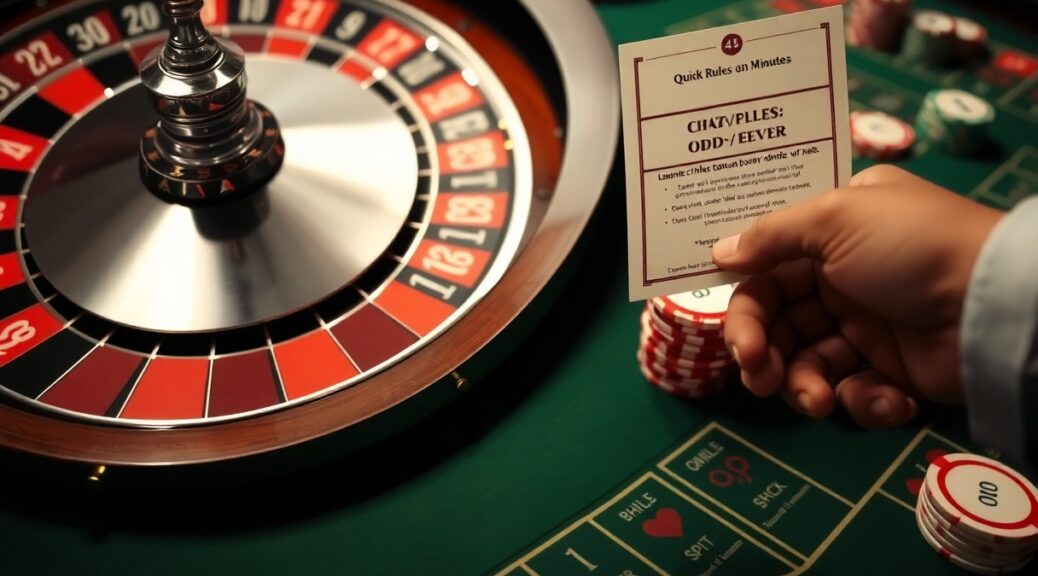
Roulette Rules Simplified: Learn The Game In Minutes
Many players think roulette is mystery, but this concise guide explains wheel, table layout, and bets so you can play confidently. Know the basic bet types (inside vs outside), the house edge that makes long-term loss possible, and how simple bankroll management and even-money outside bets can limit risk while keeping play enjoyable. Focus on rules, odds, and responsible staking to turn minutes of study into smart decisions at the table.
Types of Roulette
| European Roulette | 37 pockets (0-36); single zero; house edge 2.70%; common in land-based and online casinos |
| American Roulette | 38 pockets (0, 00, 1-36); double zero; house edge 5.26%; higher player variance |
| French Roulette | 37 pockets; same layout as European but with La Partage/En Prison rules; effective house edge 1.35% on even bets |
| Mini Roulette | 13 pockets; simplified board; house edge ~7.69%; used for novelty and faster play |
| Multi‑wheel / Variant Tables | Multiple wheels or altered payouts; increases action and complexity; payouts per wheel unchanged |
- European Roulette
- American Roulette
- French Roulette
- House Edge
- Single Zero
European Roulette
With 37 pockets (0-36) the single zero layout yields a 2.70% house edge; even-money bets pay 1:1, inside/outside bet options are identical to other styles, and many players prefer European tables for lower expected loss-for a $100 even bet expected loss ≈ $2.70.
American Roulette
Featuring both 0 and 00 across 38 pockets, the double zero layout raises the house edge to 5.26%; inside bets have the same payouts but expected losses nearly double versus single-zero tables, so bankroll swings are larger and long-term cost grows.
The impact is concrete: a $100 even-money bet on American roulette yields an expected loss of about $5.26, versus $2.70 on European; professional players and advantage-seekers often avoid American wheels for this reason and focus play where the math favors lower edge.
French Roulette
Mechanically like European roulette (0-36) but often offering La Partage or En Prison on even-money bets, French rules cut the effective house edge to about 1.35% on those bets and change loss dynamics in favor of players willing to play longer sessions.
Under La Partage you lose only half your even-money stake when zero appears; under En Prison the stake is held for the next spin and returned if that spin wins-both reduce long-term expected loss and explain why French tables attract low‑variance, cautious strategies.
Assume that preferring single-zero tables and taking advantage of La Partage/En Prison rules materially lowers expected losses over many spins.
Step-by-Step Guide to Playing Roulette
Step Overview
| Step | Action / Example |
|---|---|
| Choose a wheel | Pick European (37 pockets) for a lower house edge or American (38 pockets) if available; house edge: 2.7% vs 5.26%. |
| Buy chips | Exchange cash for table chips; note min/max bets posted at the table. |
| Place bets | Place chips on inside bets (straight 35:1) or outside bets (red/black 1:1); do so before the dealer announces “no more bets.” |
| Spin | Dealer spins wheel and drops the ball; watch for the winning pocket. |
| Payouts | Dealer collects losing bets, pays winners immediately; verify payouts and chip colors. |
Understanding the Roulette Wheel
European wheels have 37 pockets (0-36), while American wheels add a 00 for 38 pockets, changing probabilities: a single-number hit is 1/37 (~2.70%) on European and 1/38 (~2.63%) on American. The zero(s) shift even-money bets from 18/37 to 18/38 wins, which is why the European wheel yields a lower house edge overall.
Placing Your Bets
Inside bets target specific numbers (straight pays 35:1, split 17:1, corner 8:1), while outside bets like red/black or odd/even pay 1:1 and cover ~18/37 of outcomes on a European wheel. Chips must be fully placed on the layout before the dealer calls no more bets; partial placement risks rejection.
For example, a $1 straight on 7 has a 1/37 chance to win on European wheels, whereas $1 on red wins ~18/37 of the time. Combining one inside and one outside bet-say $1 straight and $1 red-reduces volatility versus betting only numbers; use splits or corners to increase coverage while keeping total stake controlled.
Winning Outcomes
Straight bets pay 35:1 but have low hit rates: ~2.70% (European) or ~2.63% (American). Dozen and column bets pay 2:1 with ~32.4% chance on European wheels, and even-money bets pay 1:1 with ~48.6% success on European wheels. Always check which wheel you’re on to interpret odds accurately.
Calculating expectation: a $1 straight on a European wheel yields expected return (1/37×35) + (36/37×−1) = −1/37, or about -2.70%; on an American wheel that becomes roughly -5.26%. Those percentages show why lower house-edge wheels and even-money bets reduce long-term loss.
Tips for Effective Play
Tighten bankroll rules, pick tables with single zero, and set both a session loss limit and a win goal; for example, stop after a 30% session loss or 50% gain to protect capital. Favor European roulette for the 2.7% house edge instead of American 5.26%, and record outcomes for 30-50 spins to review patterns objectively. Perceiving disciplined limits and table choice as performance levers will improve long-term results.
- Bankroll control
- Betting strategies awareness
- Timing and table selection
Bankroll Management
Divide your total stake into session units of about 1-2% each to sustain play: with a €500 bankroll use €5-€10 units, stop a session after a 30% loss or 50% gain, and log wins/losses; this approach limits tilt and helps measure edge over multiple 500-1,000-spin samples.
Betting Strategies
Compare systems: Martingale doubles after losses, Fibonacci increases more slowly, and flat betting keeps stakes steady; all leave the house edge unchanged, so prioritize risk tolerance and table limits when choosing a method.
For instance, a Martingale starting at €1 requires €63 on the seventh bet after six losses (1+2+4+8+16+32), and with a €5 start that jumps to €315 – table caps or a €500 bankroll can stop recovery, showing why exponential systems carry high drawdown risk despite short-term wins.
Timing Your Bets
Place bets early enough to avoid dealer rejection but late enough to use the latest visible spins: many players use the 5-10 seconds before closure to act, and betting patterns during peak hours can change wheel dynamics slightly due to dealer rhythm and wheel wear.
Quantify timing: test 200 spins staking early versus last-second bets and compare variance – early bets reduce cancellation risk, while last-second bets may exploit perceived streaks but increase the chance of declined wagers or split outcomes; track results to decide which timing reduces your variance most.
Key Factors to Consider
Focus on the House Edge, the Table Limits, and the Player Strategies you plan to use; the wheel type matters-European (2.7%) vs American (5.26%) changes expected loss substantially. Bet size and session length drive variance: a $10 bet over 1,000 spins on a European wheel implies an expected loss near $270. Bankroll relative to table min/max can make or break progressive systems. Assume that you match bet size to limits and bankroll before committing to a strategy.
- House Edge
- Table Limits
- Player Strategies
House Edge
The House Edge is the built‑in disadvantage: a European wheel carries ~2.7%, while an American double‑zero wheel is ~5.26%. Betting $10 per spin for 1,000 spins on a European wheel yields an expected loss of about $270; on an American wheel that rises to ~$526. Short runs can swing either way, but long‑run losses scale with the house edge and total amount wagered.
Table Limits
Table limits set the practical ceiling for any escalation plan: online minimums can be $1-$5, land‑based minimums often $5-$25, and maximums range from $500 to >$100,000 depending on the venue. A low maximum can destroy progressive strategies quickly; for example, a $1 starting stake with a $500 cap prevents many Martingale recoveries after several consecutive losses.
Consider how limits interact with bet progression: a Martingale starting at $1 requires a $512 single bet after nine consecutive losses, which most $500 max tables block, and the cumulative exposure before that point is >$1,000. High‑limit tables suit high‑variance plays but raise bankroll requirements and potential losses; low‑limit tables force conservative, flat betting or smaller progressions.
Player Strategies
Strategies like Martingale, Fibonacci, D’Alembert, and flat betting manage variance but do not change the game’s negative expected value; the house edge remains. For instance, a Martingale starting at $1 requires a $64 bet after six losses, exposing the player to large draws despite short‑term wins. Choose strategies that fit your risk tolerance and table constraints.
More effective game plans focus on bankroll control and controlled bet sizing: limit session loss, set win targets, and restrict single‑bet size to a small fraction of bankroll (commonly 1-2%). Simulation and tracking show disciplined fractional betting reduces ruin probability, while aggressive progressions frequently collide with table limits or exhaust funds during rare long loss streaks.
Pros and Cons of Playing Roulette
| Pros | Cons |
|---|---|
| Simple rules and fast learning curve | Built-in house edge reduces long-term returns |
| Wide bet variety: inside/outside and announced bets | High variance on single-number bets |
| Even-money outside bets offer steady play | American double-zero wheel has a 5.26% edge |
| European wheel has a lower 2.7% house edge | Fast-paced spins can cause rapid losses |
| Straight bets pay 35:1 for big wins | Limited long-term skill advantage |
| Rounds typically run every 30-60 seconds | Susceptible to gambler’s-fallacy-driven betting |
| Good for social, casual casino experience | Potential for problematic play without limits |
| Easy bankroll management strategies apply | Variance can erase small bankrolls quickly |
Advantages of Roulette
Many players enjoy roulette because of its simple rules and fast action; a straight bet pays 35:1 while outside bets settle quickly, and European wheels offer a modest 2.7% house edge, making strategic bankroll planning practical during typical 30-60 second spins.
Disadvantages of Roulette
High variance and the inherent house edge mean players often face losses over time; the American double-zero variant increases that edge to 5.26%, and quick rounds combined with progressive staking can produce fast losses.
For example, a straight bet on a European wheel has probability 1/37 and expected value per unit = (1/37)*35 + (36/37)*(-1) = -1/37 ≈ -2.70%; the identical bet on an American wheel yields ≈ -5.26%, illustrating how negative expectation plus volatility drives long-term decline.
Final Words
Following this concise guide you’ll grasp roulette’s wheel layout, bet categories, odds and payout structure in minutes, enabling clear decision-making, disciplined bankroll control and practical play strategies so you can enjoy the game with informed confidence.
FAQ
Q: How do I place bets and what are the main bet types?
A: Place chips on the table layout where labels or numbers match the bet you want. Main categories are inside bets (higher payout, lower probability) and outside bets (lower payout, higher probability). Inside bets: straight (single number, pays 35:1), split (two adjacent numbers, pays 17:1), street (row of three numbers, pays 11:1), corner (four numbers, pays 8:1), and six-line/line (six numbers, pays 5:1). Outside bets: red/black, odd/even, and 1-18/19-36 (each pays 1:1); dozens (1-12, 13-24, 25-36) and columns (each pays 2:1). You can place multiple bets in one spin; the dealer (or the interface online) locks betting before the spin and pays winning bets after the ball lands.
Q: What are the differences between European, American, and French roulette and which should I pick?
A: European roulette has a single zero (37 pockets) and a house edge of 2.70%. American roulette adds a double zero (38 pockets), increasing the house edge to 5.26%. French roulette uses a single zero like the European wheel but often offers rules such as La Partage or En Prison: when an even-money bet loses to zero, you lose only half (La Partage) or the bet is held for the next spin (En Prison), halving the house edge on even-money bets to about 1.35%. Choose single-zero games (European or French) for better odds; pick French if La Partage/En Prison is available for the lowest edge on even-money bets.
Q: How are payouts calculated and what are the odds for common bets?
A: Payouts are fixed: straight 35:1, split 17:1, street 11:1, corner 8:1, six-line 5:1, column/dozen 2:1, even-money 1:1. Odds depend on wheel type-on a European wheel the probability of a straight win is 1/37 (≈2.70%), making the expected return lower than the 35:1 payout and producing the house edge of 2.70%. For an even-money bet on European roulette the win probability is 18/37 (≈48.65%) with a 1:1 payout, yielding the same 2.70% edge. On American roulette the extra zero reduces probabilities (e.g., straight 1/38 ≈2.63%) and raises the house edge to 5.26%. Use these payout and probability pairs to compare risk and expected return for each bet type.