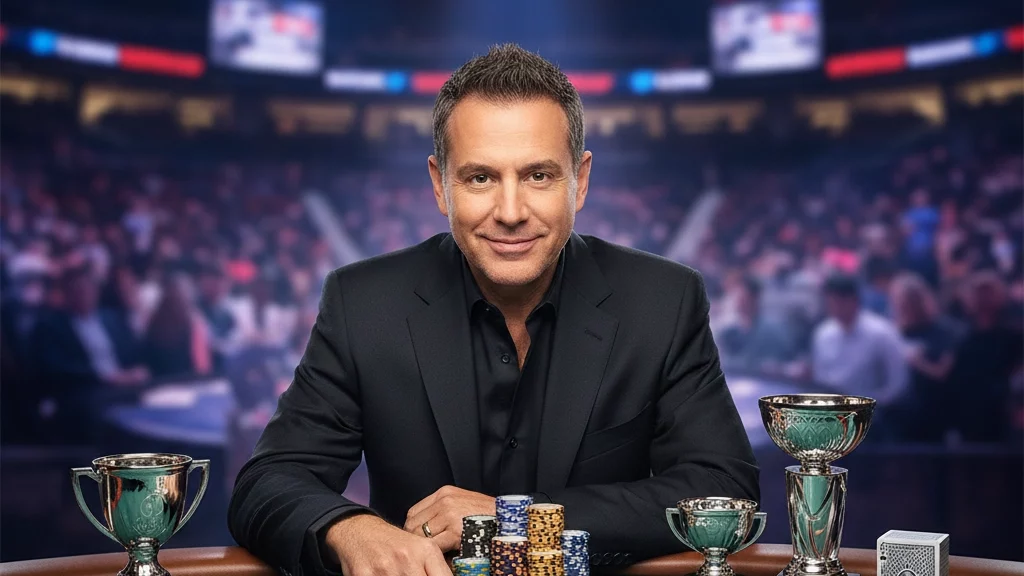
Daniel Negreanu’s Top Tournament Wins and Poker Strategy Tips

How Daniel Negreanu’s Tournament Success Can Improve Your Play
When you study Daniel Negreanu’s career, you’re not only looking at a list of trophies; you’re seeing a repeatable approach to tournaments. Negreanu’s reputation—anchored by six World Series of Poker bracelets and two World Poker Tour titles—comes from consistent decision-making, attention to opponents, and the ability to adapt across formats. You can take direct lessons from the way he approaches spots at the table, from early stages to final tables.
Rather than memorizing a few famous hands, you’ll get more value by extracting the underlying principles that produced those wins: how he builds and uses table image, how he constructs ranges, and how he manages shifting ICM pressure. The following section breaks down the strategic pillars that underpin many of his biggest victories and how you can practice them.
Core strategic pillars from Negreanu’s tournament play
- Active hand reading: Negreanu is famous for constantly putting opponents on a range of hands and refining that range with each action. You should practice narrowing ranges by observing bet sizes, timing, and prior showdowns.
- Table image and leverage: Use your perceived image to extract value or steal pots. If you’ve shown strength, pick spots to continue for value; if you’ve been bluffing, balance that with credible value hands.
- Adjusting aggression by stage: Early in tournaments, selective aggression builds stacks; in middle and late stages, aggression must consider ICM and payout jumps. Learn when to press and when to lock down.
- Exploit tendencies, don’t overfit: Target clear mistakes—overfolding to three-bets, predictable river bets, or predictable check-raises. Avoid inventing exploits against competent, balanced players.
- Mental game and endurance: Long events require emotional control. Keep tilt in check and review hands objectively; your ability to make steady decisions over many hours is a tactical edge.
How early high-stakes wins shaped his tournament blueprint
Negreanu’s earlier wins demonstrated two practical takeaways you can apply immediately. First, he often converted small edges into big paydays by repeatedly capitalizing on opponents’ mistakes—folding too often, calling too wide, or playing predictably. Second, he showed the value of mixed play: alternating aggressive bluffs with snug value lines so opponents couldn’t lock you into a single approach.
To practice these lessons, review hands where you felt uncertain about opponents’ ranges. Ask yourself: did you update your read after each street? Could you have used your image to apply pressure? Drill specific spots—open-raise dynamics, three-bet defense, and river sizing—until the correct instincts become automatic.
Next, you’ll get a closer look at several of Negreanu’s signature final-table maneuvers and step-by-step examples of how to replicate those lines in your own tournament games.
Signature final-table maneuvers Negreanu regularly employs
At final tables Negreanu leans on maneuvers that blend information gathering with pressure—often disguised as either straightforward value or carefully timed aggression. These lines are less about fancy theatrics and more about imposing decisions on opponents who are sensitive to payoff structures. The most important maneuvers to understand are:
- Targeted aggression against marginal ranges: Negreanu isolates players who display passivity or predictable calling patterns. Instead of bluffing the table as a whole, he pressures players whose likely calling ranges contain too many hands that fold to river aggression.
- Defined float-and-bet sequences: He will call a turn with the explicit purpose of barreling a polarized range on the river when the pot odds and blockers line up. The float only works when the opponent’s river checking frequency is high enough to justify value on later streets.
- Adaptive sizing to exploit stack depths: Rather than default bet sizes, he changes sizes to create awkward decisions for opponents—large enough to price out hands but small enough to keep worse hands in. At final tables this sizing often forces ICM-tinged folds or thin calls from desperation ranges.
- Selective showdowns to build an image: He will show hands to create or repair an image—either to appear looser (so future value bets get action) or tighter (so steals are more credible). This is done sparingly and intentionally, not as a vanity play.
- Subtle polarization on rivers: Instead of always overbetting as a bluff, he mixes overbets with small-value bets to deny opponents clean cards to call with. The mix makes it difficult for opponents to assign a correct calling frequency.
Each maneuver hinges on two capabilities: accurate range assessment and the patience to pick the right moments. Negreanu doesn’t force these plays; he creates spots for them. Learning to wait for those spots is half the skill.
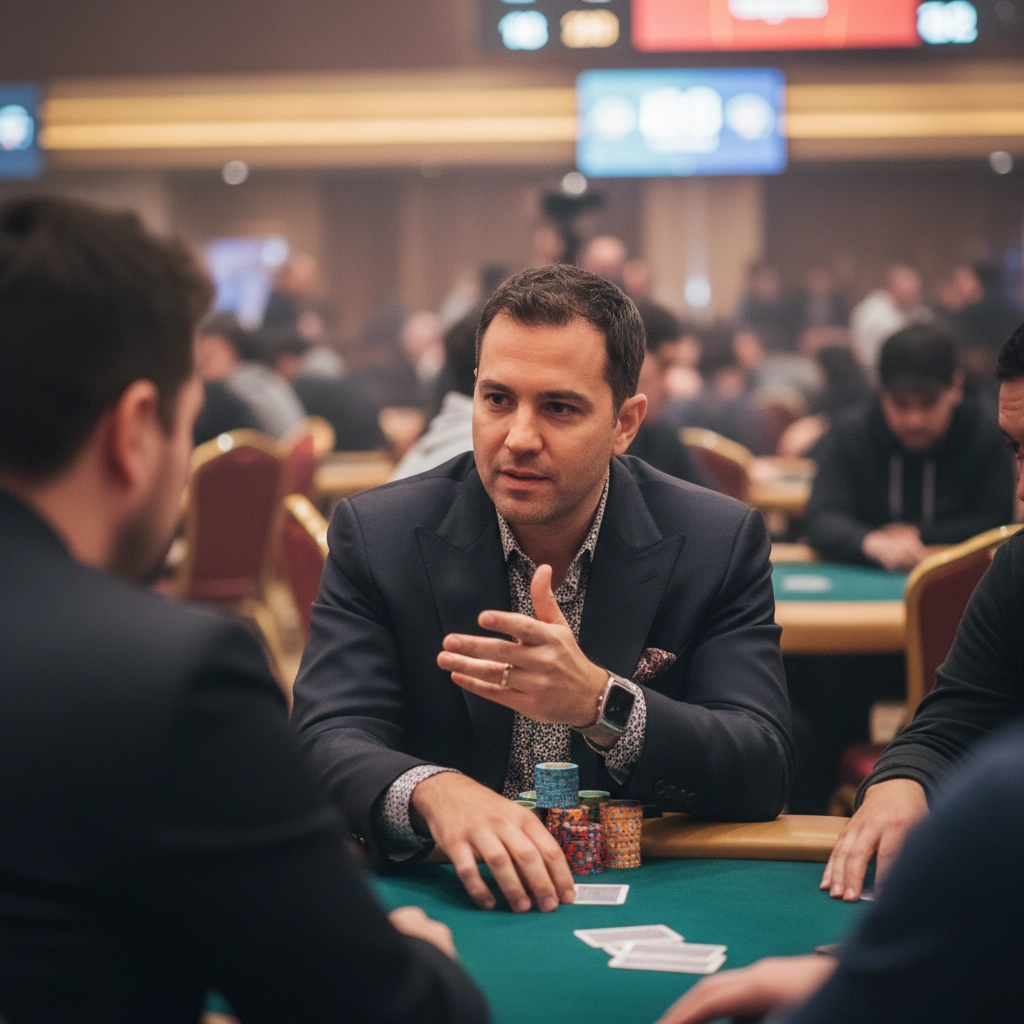
Step-by-step examples and practice drills to replicate his lines
Below are concrete situations Negreanu often exploits, with step-by-step decision trees you can practice and drills to make the lines intuitive.
Example A — Late-stage steal vs. tight seated opponent
Spot: You’re button, medium stack; blinds are elevated; player in the small blind is tight, fearing ICM. Line: Open to ~2.5–3x; if the SB calls and you see a dry flop, c-bet small to deny equity and fold equity. Steps: 1) Preflop: assess whether SB’s calling range is dominated by broadways and suited connectors; 2) Flop: c-bet small (25–40% pot) to target folding equity; 3) Turn: if checked to, either fire again if you hold blocker or check to control pot size; 4) River: convert into a value or a bluff based on line and opponent tendencies. Drill: run 50 simulated hands where you open from the button against tight callers and track how often a small c-bet closes the action.
Example B — Floating a turn to bluff the river
Spot: You call a single raise on the flop with a marginal hand (backdoor draws or middle pair) because the raiser shows aggression but often barrels turns. Line: Float the turn, read the turn action, and decide on a polarized river bet. Steps: 1) Preflop/Flop: define the raiser’s continuation range; 2) Turn: call with intention to represent a missed draw on the river if the raiser checks; 3) River: bet sized to deny correct calls (often larger than flop bets). Drill: review hand histories where you floated and either succeeded/failed—note opponent fold-to-river % and blocker combinations that worked.
Practical drills to internalize these lines
- Play 100 hands with a focused goal (e.g., execute button steals and small c-bets) and record outcomes.
- Simulate final-table stack distributions and practice shove/fold thresholds against reasonable calling ranges—track mistakes to see if you’re overfolding under ICM pressure.
- Analyze five hands per week where you showed down a bluff or thin value—ask whether the line changed your image and whether that image would create future edge.
These exercises shift you from theoretical knowledge to applied instincts—exactly how Negreanu turns situational advantages into final-table wins.

Putting the strategy into action
Adopting elements of Daniel Negreanu’s approach doesn’t require you to become a carbon copy of his table persona. Start by choosing one pillar—hand reading, adaptive sizing, or ICM-aware aggression—and apply it deliberately in your next sessions. Create measurable goals (number of button steals, successful floats, or showdown wins), review results, and iterate.
Keep the focus on process over results: build the habits that produce good decisions, track simple stats to spot leaks, and protect your mental energy so you can make clear reads late in long events. For additional perspectives and interviews that illuminate his methods, see Daniel Negreanu’s official site.
Above all, stay curious. The most durable tournament improvements come from consistent practice, honest hand review, and the willingness to adapt when opponents change. Use Negreanu’s principles as a flexible framework, not a rigid checklist, and let real-table feedback guide your adjustments.
Frequently Asked Questions
How do I practice active hand reading like Negreanu?
Focus on narrowing ranges each street: note preflop action, bet sizes, timing, and previous showdowns. Drill with hand-history reviews and solvers, practice putting opponents on range brackets (e.g., 15–25% vs. 40–60%), and track how often you update that range correctly after river cards and bets.
When should I change my aggression because of ICM?
Adjust aggression when payout jumps create significant fold equity differences—typically in late stages and at final tables. Shorter stacks require tighter shove/fold thresholds; medium stacks should avoid high-risk gambles that cost tournament life. Use ICM calculators or simulated exercises to internalize common shove/fold cutoffs.
What mistakes should I avoid when copying Negreanu’s lines?
Don’t overapply his tactics without regard for table dynamics—common errors include bluffing too often, showing hands gratuitously, or failing to balance ranges. Also avoid overfitting to single opponents; prioritize clear exploits and maintain a mental-game routine so tilt doesn’t derail well-intended strategies.