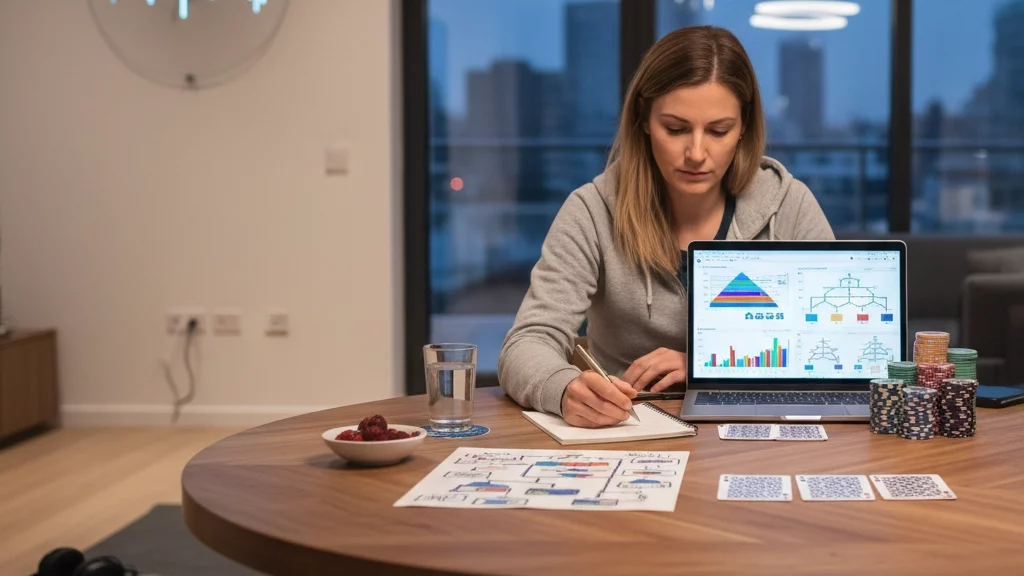
Famous Poker Players’ Training Routines: What Pros Like Liv Boeree Practice
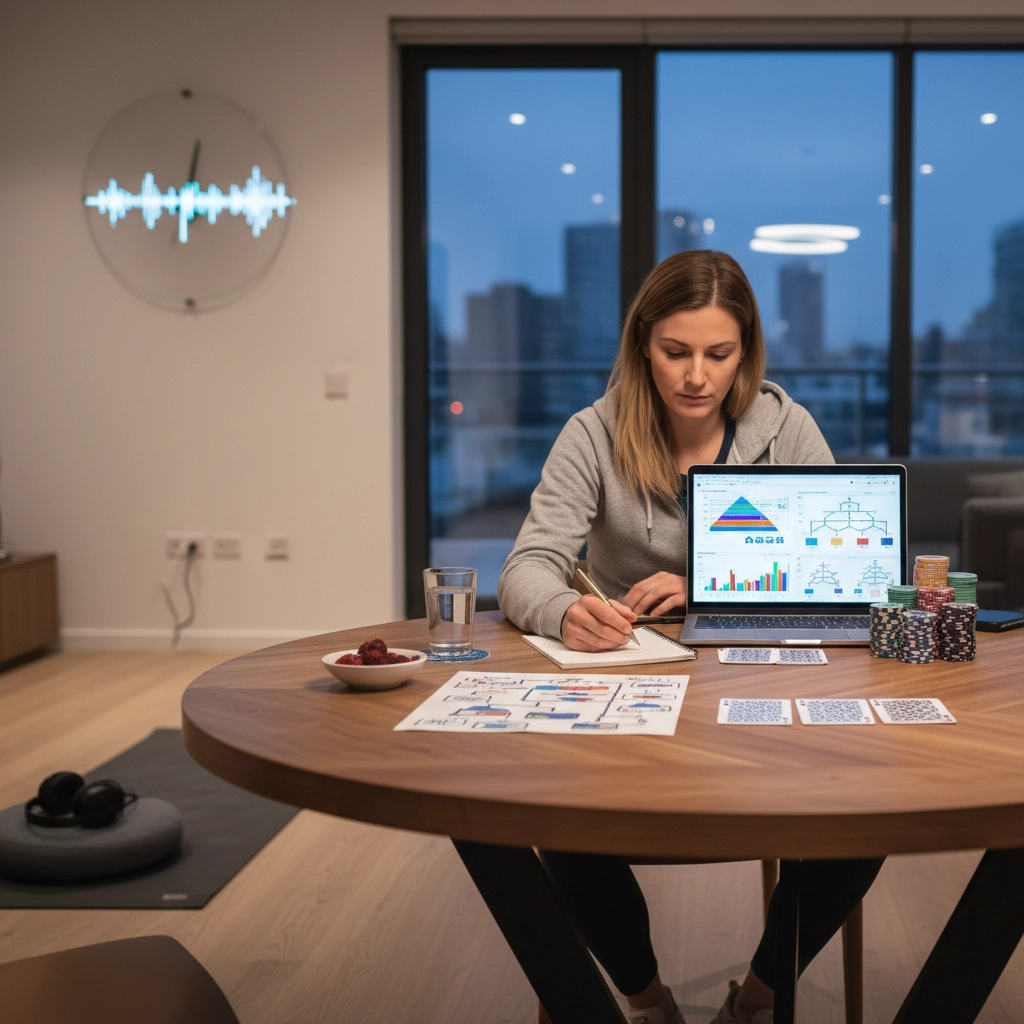
How top professionals structure practice and why that should matter to you
You can’t rely on raw talent alone if you want to climb the stakes. Pros treat poker like a skill to be engineered: measurable practice, focused review, and routines that protect decision quality under pressure. Understanding how elite players plan their days gives you concrete steps to improve faster—whether you play online, live, or a mix of both.
At the highest level, a training routine is less about playing hours and more about deliberate practice. You want to create a repeatable cycle: prepare, practice, analyze, recuperate. That cycle reduces tilt, improves pattern recognition, and helps you execute mathematically sound decisions when it counts.
Common elements of elite poker training you can start using
- Structured study blocks: Divide time into focused sessions—solver work, theory reading, and hand-history review—rather than long, unfocused play sessions.
- Deliberate hand review: Analyze mistakes and alternative lines, not just wins. Tag recurring leaks and make action plans.
- Solver and equity practice: Use GTO solvers or equity calculators to test difficult spots and internalize ranges.
- Mental conditioning: Practice mindfulness, breathing, or visualization to maintain decision quality during long sessions.
- Physical routine: Sleep, nutrition, and regular exercise play a direct role in focus and emotional control.
- Game selection and bankroll management: Pros plan which formats and stakes to play to maximize learning and minimize variance-driven tilt.
Liv Boeree’s core practice pillars and how to adapt them to your schedule
Liv Boeree blends rigorous analytical study with mental and physical preparation. You can adopt her pillars without elite-level resources—focus on principles rather than exact replication.
Mental training and deliberate calm
- Start sessions with a short mindfulness or breathing routine to reduce reactivity—this helps you avoid emotional decisions after bad beats.
- Use reflection prompts after sessions: What decisions felt rushed? When did you lose composure? Make one actionable fix for next time.
Study methods and solver-driven analysis
- Allocate specific days for solver work (range construction, bet-sizing answers) and other days for hand-history review.
- When using solvers, focus on patterns and principles—frequency, bet sizing relationships, and exploitative deviations—rather than memorizing lines.
Physical routine and recovery
- Maintain consistent sleep and short exercise sessions to boost cognitive stamina for long tournaments or multi-table sessions.
- Pay attention to hydration and nutrition at the table—small gains compound into better end-of-day decisions.
Those pillars give you a practical framework: calm your mind, sharpen your theory, and keep your body in the game. In the next section, you’ll get a sample weekly schedule that translates these habits into a realistic practice plan you can start following immediately.

A sample weekly schedule you can start using this week
Below is a practical, adaptable weekly template based on Liv’s pillars. Treat it as a framework—shift the order and durations to match your life, but keep the balance between play, study, and recovery.
Example for a dedicated serious-amateur (≈25–30 hours/week):
– Monday: Solver & theory day (2 x 90-minute blocks)
– Block 1: 90 minutes solving one recurring spot (bet-sizing, river lines).
– Break: 15 minutes movement + hydration.
– Block 2: 90 minutes reading/concept consolidation (notes, articles, videos).
– Tuesday: Short play session + debrief (3–4 hours)
– Warm-up 15 minutes: breathing + goal setting.
– Play: 3 hours with 50/10 cadence (50 minutes on, 10 minutes off).
– Post-session: 30-minute hand tagging and one deep-dive on the single worst hand.
– Wednesday: Hand-history review and exploitative practice (2 x 75-minute blocks)
– Focus on hands where leaks were visible; build targeted exploit lines.
– Thursday: Physical recovery + light study
– Morning: 30–45 minutes cardio or strength.
– Evening: 60 minutes of light theory or mental training (visualization/mindfulness).
– Friday: Volume play (4–6 hours)
– Play with same warm-up and break structure; concentrate on applying weekly concepts.
– Saturday: Mixed—tournament practice or longer sessions (5–8 hours)
– If playing live, simulate schedule with meal and rest planning.
– Sunday: Review week + planning (90 minutes)
– Update leak list, set next week’s solver targets, and schedule any coaching/review.
Adaptations:
– Recreational player (5–10 hours/week): compress the solver work to one 60–90 minute block and make play sessions shorter; prioritize deliberate review over volume.
– High-volume pro: flip the schedule—volume first, targeted study in short, intense blocks afterward; maintain recovery as non-negotiable.
Session-level routine: warm-up, focus techniques, and debrief template
Consistency within each session is where small edges compound. Use this checklist before, during, and after every session.
Pre-session (10–20 minutes)
– Mental warm-up: 3–5 minutes breathing/visualization; set a single measurable goal (e.g., “avoid three-bet cold-calls out of position”).
– Quick review: scan yesterday’s leak list for one reminder.
– Technical warm-up: 10 hands or 10 minutes of a solver/equity drill to prime pattern recognition.
During session
– Block structure: use 50–60 minute focused blocks with 8–12 minute breaks—stand, hydrate, breathe.
– Keep a live notes file: tag hands with categories (tilt, sizing, misread, timing) and a one-line reason.
– If tilt appears: stop for a full break and do a 5-minute breathing reset; short walk if possible.
Post-session (15–30 minutes)
– Triage: pick the top 3 tagged hands. For each, answer: what was my objective, what info did I miss, what would the solver suggest?
– Update leak list: add one actionable item for next session.
– Recovery: log sleep plan for the night and note any physical needs (nutrition/hydration).

Measuring progress and iterating your routine
Treat your routine like an experiment. Track a few metrics weekly: time on study vs play, number of hands reviewed, frequency of tagged leak types, and a simple performance metric (ROI, final table rate, or EV/100 for cash players). Monthly, ask:
– Which study formats produced the clearest improvements?
– Which session elements lead to tilt or poor decisions?
– Are physical recovery habits holding steady?
Make one small change per month—add a daily 10-minute breathing practice, or switch one study block to a live hand-review—and measure its effect. Incremental, evidence-driven tweaks are how pros like Liv sharpen their edge without burning out.
Putting the practice into play
The small choices you make each session compound faster than any single breakthrough. Pick one pillar—mental warm-ups, solver work, or scheduled recovery—and commit to it for a month. Track one simple metric (hands reviewed, sessions with a breathing routine, or solver hours) and review weekly. Use the cycle of prepare, practice, analyze, recuperate as your operating rhythm, and adjust only one variable at a time.
If you want a practical next step, schedule your week now: block one solver or study session, one focused play session with the warm-up/debrief checklist, and one recovery day. For examples of how pros articulate their approach and to explore further resources, see Liv Boeree’s site.
Start small, be consistent, and let deliberate practice become the habit that elevates your play.
Frequently Asked Questions
How much solver work should a serious-amateur do each week?
For a serious-amateur aiming for steady improvement, 2–4 hours per week of focused solver work is a practical target. Prioritize consistency over volume: one or two 60–90 minute blocks that target recurring spots will yield more learning than scattered, unfocused sessions.
What’s the fastest way to stop tilt during a session?
Use a short, repeatable reset: stop play, do a 3–5 minute breathing exercise or brief walk, reframe the next decision (process-focused goal), and review one tagged hand to re-anchor your thinking. If emotions persist, end the session and defer decisions until you’ve recovered.
How should recreational players adapt the weekly schedule in this article?
Compress study into one weekly solver/theory block (60–90 minutes), keep play sessions short and deliberate (1–2 hours), and make post-session review mandatory even if it’s just one hand. Prioritize recovery and avoid overloading—consistent, focused practice beats sporadic volume for long-term progress.