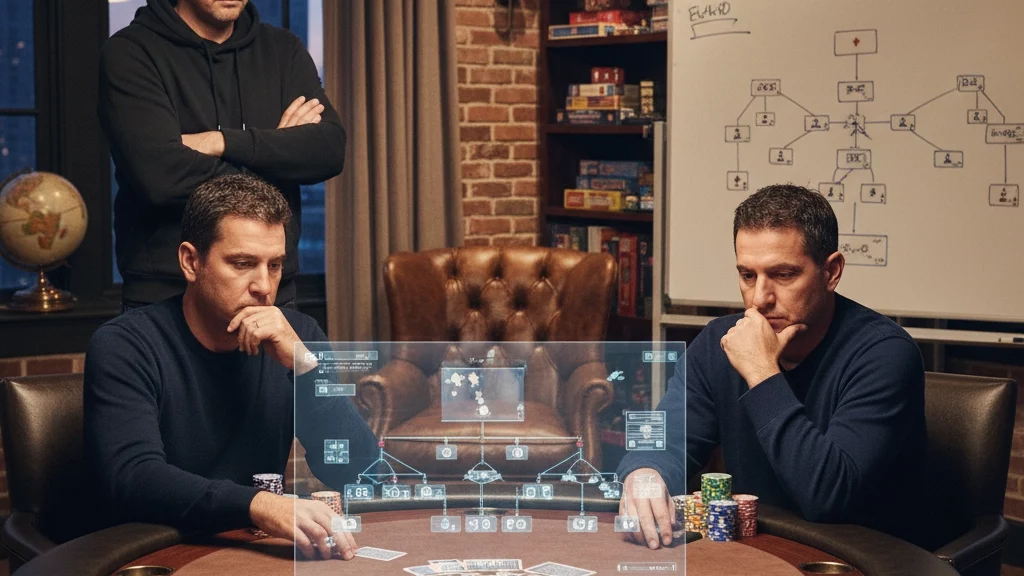
How WSOP Champions Train: Insights from Daniel Negreanu and Phil Hellmuth

Why studying champions’ training will change how you prepare for tournaments
You can shorten the learning curve by copying the processes top players use. WSOP champions succeed not because of luck but because they convert hours of study into reliable decisions under pressure. When you inspect how elite players structure practice, you’ll notice two repeating themes: disciplined, deliberate study and repeated live-table experience. Those themes apply whether you want to climb online stakes or survive a multi-day bracelet event.
Start by thinking of training as a system, not a checklist. Your system should combine technical work (ranges, equity, solvers), live-skill work (reads, timing, behavior), and performance habits (sleep, tilt control, stamina). Below you’ll find concrete patterns drawn from Daniel Negreanu and Phil Hellmuth that you can adapt immediately.
Clear, actionable training habits from Daniel Negreanu and Phil Hellmuth
Daniel Negreanu — study-first routines, hand-reading, and iterative feedback
If you want to improve your long-term decision-making, adopt a study loop similar to what Negreanu emphasizes: observe, analyze, discuss, and repeat. He’s long promoted close hand-review work, range-based thinking, and open discussion about lines — all intended to sharpen hand-reading and exploitative adjustments.
- Routine hand review: You should review critical hands after every play session. Focus on why a line was chosen and whether your range construction matched the situation.
- Range-based thinking: Train yourself to think in ranges rather than individual cards. Practice assigning opponent ranges and narrowing them on different streets.
- Use tools strategically: Incorporate solver analysis to check major river and turn decisions, then translate solver outputs into practical, exploitative adjustments you can use live.
- Feedback loop: Discuss hands with peers or coaches. Explaining your reasoning aloud will reveal gaps and force refinements to your mental model.
- Table observation: Negreanu emphasizes reading timing, bet sizing, and eye contact—so practice noticing non-verbal cues when you play live or watch streams.
Phil Hellmuth — live experience, pattern recognition, and tournament rituals
Hellmuth’s longevity is rooted in massive live-table experience and a fierce focus on tournament-specific skills. You can replicate elements of his approach by prioritizing volume in live settings, rehearsing tournament endurance, and developing pre-game routines that put you in a competitive mindset.
- Play long sessions: Build endurance by playing multi-hour live or live-simulated sessions so you can manage attention and decision quality late in a day.
- Pattern recognition: Train to catalog common player types and their typical lines. You should build a mental library of tendencies (sticky callers, aggressive squeezers, etc.).
- Pre-tournament rituals: Create a warm-up: review key ranges, do short solver drills, and practice breathing or focus techniques to reduce tilt risk.
- Exploitative focus: While modern solvers teach balanced play, Hellmuth’s strength is finding and exploiting human mistakes—so prioritize spotting and punishing real-world tendencies.
These early insights give you two complementary blueprints: a study-heavy, analytical path and an experience-driven, exploitative path. In the next section, you’ll get specific daily and weekly training plans, sample solver workflows, and mental warm-ups that combine the best of both champions’ methods.

A practical daily and weekly training plan you can start this week
Build your week around three pillars: focused study, live/volume practice, and reflective review. Below is a portable plan you can adapt whether you play cash, MTTs, or mixed formats.
– Daily (90–150 minutes)
– 30–45 min solver or range work: pick one common spot (e.g., 3-bet pot vs button steal) and explore defender/attacker ranges. Keep notes of 2–3 actionable adjustments.
– 30–45 min hand review: review hands from the previous session, focusing on decisions that lost the most EV. Ask “what range am I assigning, why, and what changes next time?”
– 15–20 min tactical warm-up: do a quick timing/read drill (watch a short live-table clip, note tells/timings, then compare with reality).
– Weekly (8–15 hours, split across 4–6 sessions)
– 1 full live or simulated long session (4+ hours) to build endurance and apply reads under fatigue (Hellmuth style).
– 2 study blocks (2 hours each) with deeper solver runs and peer/coaching discussions (Negreanu loop: observe → analyze → discuss → repeat).
– 1 review session (1–2 hours) to consolidate lessons: create short, specific “if X, then Y” rules for spots that recurred.
– Monthly checkpoint
– Run an open-ended review: compare win rates by spot, test one exploitative adjustment for two weeks, then re-evaluate. Track whether changes improved EV or increased variance.
Structure keeps practice deliberate (targeted spots), volume realistic (long sessions weekly), and feedback consistent (daily reviews and monthly checks).
Solver workflows that actually translate to live decisions
Solvers are powerful but only useful when simplified into practical rules you can execute under time pressure. Use this workflow:
1. Pick a representative spot: choose a common, high-impact situation you face (e.g., BTN open vs SB defend; pot 3-bet on Qc8c4s board).
2. Define ranges: construct attacker and defender ranges as you believe they occur at your stakes. Be honest—include human tendencies (overfolding, sticky calling).
3. Run baseline GTO: get frequencies and sizing recommendations. Note where the solver’s strategy is complex.
4. Simplify into primitives:
– Convert frequencies into thresholds: e.g., “C-bet 60% on dry boards, small sizing 40% in multiway pots.”
– Create hand-class rules: “Top pair with backdoor flush -> bet; weak pair without backdoors -> check-fold to one bet on wet turns.”
5. Test exploitatively: simulate deviations based on what you actually see at your tables (opponent folds too much to small turn bets → increase small-turn stab frequency).
6. Drill the rules aloud and in short timed quizzes so you can recall them quickly during sessions.
Keep a one-page “solver cheat-sheet” for each spot with sizing, frequency, and 3 quick exceptions you’ll check live (stack depth, player type, recent history).
Mental warm-ups and in-session routines for tournament endurance
Adopt rituals that prime focus and reduce tilt susceptibility:
– Pre-session (15–30 min)
– Physical: light movement, hydrate, caffeine timed so it peaks mid-session.
– Cognitive: 10-min breathing/visualization—visualize tight spots (bubbles, final table) and rehearse calm responses.
– Tactical: 10-min solver drill + quick review of opponent tendencies you expect.
– In-session
– Two-minute reset after any big swing: breathe, note emotion, log the hand quickly (no analysis until break).
– Every 90–120 minutes: stand, stretch, eat a small snack—this preserves decision quality late in the day.
– Break routines
– Use breaks to review 3 hands (quickly): one good decision, one uncertain, one clear leak. Turn insights into a single action for the next segment.
Combine Negreanu’s reflective loops with Hellmuth’s volume and rituals: study smart, then stress-test those lessons under real fatigue and human opponents.
Putting champion habits into action
Decide on one small experiment this week: a single solver-derived rule to test at your next long session, or a pre-game routine you’ll follow for three consecutive tournaments. Measure it (note how decisions, tilt, and stamina change), then iterate. Training like a champion is cumulative—short, consistent experiments compound into lasting skill gains. If you need reference material on event structure or tournament schedules while planning live volume, check official tournament resources such as WSOP.
Finally, treat feedback as the engine of improvement: log hands, get one external critique per month (coach or peer review), and keep a simple checklist of the tactical rules you’re practicing. Over time you’ll build a personalized system that blends Negreanu’s analytical loops with Hellmuth’s endurance and table instincts—one that fits your goals and the rhythm of the games you play.
Frequently Asked Questions
How often should I run solver work versus live practice?
Balance matters: for most serious players 30–45 minutes of focused solver or range work per day combined with at least one long live or simulated session weekly is effective. Adjust the ratio based on your immediate goals—study-heavy before shifting formats, volume-heavy when conditioning for live events.
Can I realistically combine Negreanu’s study approach with Hellmuth’s volume-driven habits?
Yes. Use study sessions to create concise, testable rules and use volume sessions to validate and adapt those rules against real opponents. The key is a feedback loop: learn (Negreanu), apply (Hellmuth), review, and repeat.
What’s the quickest way to improve tournament endurance and tilt control?
Adopt short, consistent rituals: a pre-session warm-up (breathing + solver drill), two-minute resets after big swings, and scheduled breaks every 90–120 minutes. Pair these with periodic long sessions (4+ hours) to build physical and mental stamina.