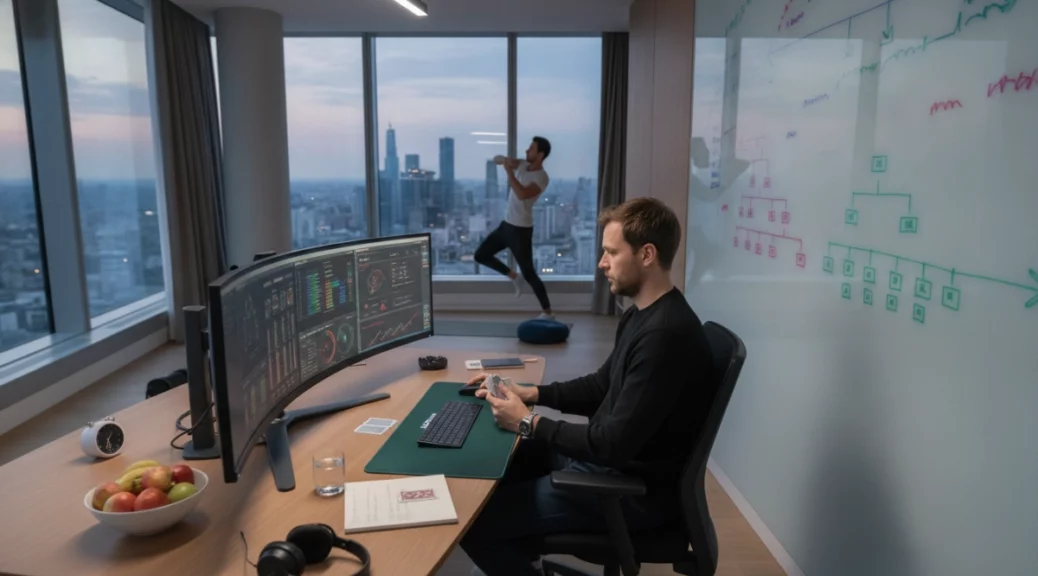
Fedor Holz training routine: How he prepares for tournaments

How Fedor Holz’s preparation shapes tournament success — and what you can learn
When you study elite players, the difference isn’t just raw talent — it’s the structure behind their preparation. Fedor Holz built one of the strongest tournament games in the world by treating preparation as a disciplined process: focused study, targeted practice, and deliberate mental and physical maintenance. Understanding the pillars of his routine gives you a blueprint for improving consistency and decision-making under pressure.
Core principles that guide his training
You can borrow these high-level principles and apply them at any level:
- Deliberate practice: You work on specific weaknesses, not just volume. Short, focused sessions on a single concept beat unfocused hours at the table.
- Data-driven study: You use hand histories, solver outputs, and statistical tracking to find leaks and verify adjustments.
- Mental edge: You prioritize routines that sharpen focus and emotional control so decisions remain consistent deep into long tournaments.
- Balance and recovery: You maintain physical fitness and sleep hygiene so your cognitive performance doesn’t degrade over multi-day events.
Daily and weekly building blocks of his training routine
Fedor’s routine centers on predictable building blocks you can adapt to your schedule. Think of your week as alternating between study-heavy days and application-heavy days so learning and practice reinforce each other.
Typical components you should adopt
- Session planning: Begin each session with a clear objective: a solver concept, a positional strategy, or a specific bubble/endgame skill. You’ll learn faster when every session has measurable goals.
- Solver work and review: Allocate time to explore game-theory concepts with solvers. Use solver outputs to build default ranges and to understand common exploitative deviations you can make at the table.
- Hand-history analysis: After play, review critical hands. You should tag hands by theme (ICM decisions, bluffs, river folds) and revisit them until the correct decision patterns are internalized.
- Peer review and coaching: Discuss hands with peers or a coach. Explaining your reasoning exposes gaps and accelerates understanding.
- Short practical drills: Use focused practice like heads-up or short-handed drills to reinforce concepts learned in solver work.
- Physical and mental maintenance: Include light exercise, meditation or breathing practice, and sleep routines. You’ll find your concentration and tilt resistance benefit directly from these habits.
As you adapt these building blocks, set realistic time targets (for example, a mix of 60–90 minute focused study blocks and 2–4 hour application sessions) and keep a compact log of progress. In the next section you’ll get a concrete, hour-by-hour example of a tournament-week schedule and specific drills you can use to emulate this approach.
Tournament-week: an hour-by-hour template you can follow
Below is a practical, adaptable daily template inspired by how elite pros like Fedor structure the days leading into and during a big event. Use this as a starting point and adjust for your sleep cycle and event schedule.
– 08:00 — Wake, hydration, mobility (20–30 minutes)
– Light stretching or a short walk to get blood flowing. Hydration and a protein-rich breakfast to stabilize energy for long sessions.
– 08:30 — Short mental warm-up (10–20 minutes)
– 10 minutes of focused breathing or a brief mindfulness exercise. Follow with a 5–10 minute visualization: run through key decisions (early opening ranges, typical river spots, dealing with big swings).
– 09:00 — Solver/practice block (60–90 minutes)
– Focus on one concrete concept: a river bluff-frequency problem, 3-bet pots vs. specific player types, or push/fold ranges in short-stack ICM spots. Keep it tightly scoped.
– 10:30 — Tactical review and notes (30 minutes)
– Translate solver outputs into simple table rules (if X, then Y % of bluffs). Add a line or two to your session plan for later drills.
– 11:00 — Light exercise or mobility (20–30 minutes)
– Short activity to break cognitive load—a brisk walk or light calisthenics. This helps maintain energy for the tournament session.
– 12:00 — Pre-session prep (30–45 minutes)
– Final review of opponent tendencies (if available), rehearse opening ranges, and run a 15–20 minute warmup on a heads-up/short-handed site or app focusing on speed and decision clarity.
– 13:00–18:00 — Tournament play / main session
– During play, use a micro-routine: 60–90 seconds between hands for breathing/re-centering, 5-minute breaks every hour when possible. Keep hydration and easily digestible snacks on hand.
– 18:30 — Immediate debrief (30–45 minutes)
– Right after play, tag and export 8–12 hands that felt important. Note your reasoning and any gut reactions while memories are fresh.
– 19:15 — Dinner and recovery (60–90 minutes)
– Unplug mentally. Light, balanced meal; avoid heavy carbs that make you sluggish.
– 21:00 — Deep study block or coach review (60–90 minutes)
– Focused hand-history analysis, solver checks for the tagged hands, or a coaching call. If fatigue is high, reduce to 30 minutes of high-impact study (ICM spots, final table scenarios).
– 22:30 — Wind-down (30–45 minutes)
– Low-stimulus activity, light stretching, and a brief breathing/visualization session focusing on process goals rather than outcomes.
– 23:30 — Sleep
– Aim for consistent sleep windows; recovery is non-negotiable for multi-day consistency.
Adjust durations for deep-stacked events or for days with multiple flights. The key is predictable structure and short recovery intervals.
Specific drills and micro-sessions to copy from Fedor’s playbook
These focused exercises target the skills that separate consistent tournament performers from the rest.
– ICM push/fold drills (20–30 minutes)
– Use an ICM trainer to practice shove/fold decisions at varying stack sizes. Log mistakes and revisit the same spots until decisions become automatic.
– River-frequency drills with a solver (30–45 minutes)
– Pick one river texture and run solver sims to determine correct bluffing/calling frequencies. Convert solver language into table heuristics (e.g., “versus single-barrel bluff, call with X hands”).
– Short-handed aggression sprints (30 minutes)
– Play 15–30 short-handed hands with a time bank (20–30 seconds per decision) to train aggressive opening ranges and pressure application.
– Final-table simulation (45–60 minutes)
– Recreate the bubble-to-final-table progression: seated stacks, blind jumps, and ICM pressure. Practice exploitative adjustments for medium-stacked players and pure ICM solutions for short stacks.
– Tilt-control micro-practices (5–10 minutes between levels)
– One-minute breathing resets and two scripted “if-then” statements (e.g., “If I lose a big pot, then I pause, breathe 5 times, and review one prior good decision”).
– Post-session tagging and homework (15–20 minutes)
– Immediately tag hands with themes, assign 2–3 follow-up tasks (run solver on this spot, discuss with coach, or create a quick rule), and add them to your week’s study plan.
Combine these drills over multiple days—rotate high-cognitive work (solver, ICM) with lower-intensity, high-repetition drills (short-handed sprints, push/fold). The result: sharper, transferable skills you can deploy under real tournament pressure.
How to start this week
Pick two small, specific changes to implement immediately—one study habit and one practice drill. For example, add a 60-minute solver block on a single river texture and a 30-minute short-handed aggression sprint on your next play day. Log outcomes and adjust the next week based on what produced the clearest improvement in decision speed or win-rate consistency.
- Set a single measurable goal (e.g., reduce incorrect ICM shoves by X%).
- Keep sessions short and focused: two high-quality blocks per day trump unfocused marathon sessions.
- Schedule recovery as intentionally as study—mobility, sleep, and short mental resets are part of the program.
The long view: sustainability beats intensity
Training like an elite player is less about copying every habit and more about adopting a repeatable, inspectable process you can maintain. Small, consistent improvements—tracked, tested, and adjusted—compound into reliable tournament performance. Treat each session as data: ask what you learned, what you’ll change, and how you’ll measure it next time. If you want a straightforward solver tool to keep your solver work practical and repeatable, check out GTO+ solver.
Start small, stay consistent, and make recovery non-negotiable. That’s how Fedor Holz’s approach scales from isolated insights to tournament-winning resilience—and how your game will improve over time.